Kiraala: Designing a Peer-to-Peer Rental Marketplace for the Circular Economy
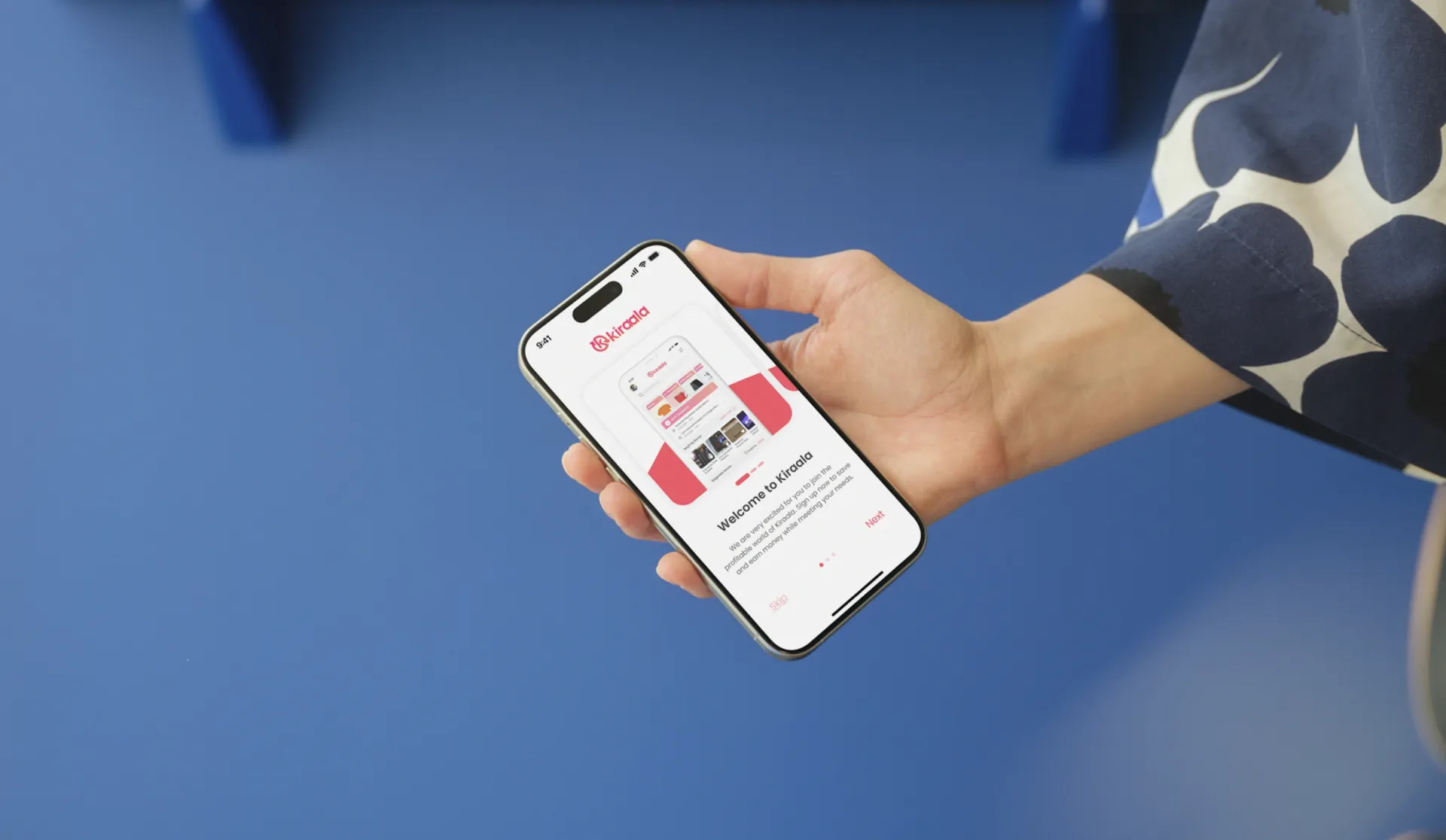
Mobile app design for a sharing economy platform where individuals and businesses in Türkiye rent anything from electronics to camping gear, reducing consumption and generating income from idle items.
Kiraala is a peer-to-peer rental marketplace: a platform where individuals and businesses can list items they own and rent items they need, all within a single mobile app. The goal was to design an experience that works equally well for both sides of the transaction, and that makes the idea of renting from a stranger feel as natural and trustworthy as buying from a shop.
A two-sided marketplace is one of the most complex UX problems in product design. The platform needs to serve people who want to earn money from idle items, and people who want to save money by renting instead of buying. These are different motivations, different mental models, and different flows, all within the same app. The design also needed to build trust between strangers, handle category discovery across a very wide range of product types, and provide a return process that protects both parties without creating friction.
A complete mobile app for iOS and Android covering the full rental lifecycle: personalised onboarding with category selection, a location-aware home feed with active request tracking, a powerful search and filter system (by category, location, rental date, source, price, sort order, and recency), in-app chat between lender and renter, and a QR-code-secured return flow with a refund summary screen. The app is available on Google Play Store and the Apple App Store.
The Challenge
Kiraala operates in a category with very few established patterns in Türkiye. Unlike ride-sharing or food delivery, peer-to-peer product rental requires users to trust that a stranger will take care of their belongings, and that a listing will accurately represent what they receive. The design had to close this trust gap at every stage of the experience, without adding friction that would drive users away from the platform.
Two roles, one app. Every Kiraala user is potentially both a lender and a renter. The home feed needs to serve discovery for renters, while the listing flow needs to serve income generation for lenders. The bottom navigation had to make both modes equally accessible: Home (discover), My List (manage listings), Post (create a listing), Notifications, and Chat.
Category breadth without overwhelm. Kiraala covers everything from electronics and gaming hardware to camping equipment, fashion, baby products, home goods, instruments, and sports equipment. A user who opens the app for the first time should be able to find a relevant product quickly, and a lender should be able to post in the right category without confusion. The category personalization step in onboarding addresses the discovery side, while the filter system addresses search precision.
A return process that protects both parties. When a rental ends, both the lender and the renter need to confirm the handoff. A system that relies on self-reporting creates risk of dispute. Kiraala uses a QR code scan at the moment of return, where the renter presents the code and the lender scans it from their device, to create a verified, timestamped record of the return. This flow had to be simple enough that neither party needs instructions.
 Kiraala: Designing a Peer-to-Peer Rental Marketplace for the Circular Economy · The Challenge
The Solution
The Kiraala mobile app was designed as a complete rental ecosystem: from the moment a user installs the app to the moment they complete a return. Each part of the experience was designed to reduce one specific source of friction in the peer-to-peer rental process.
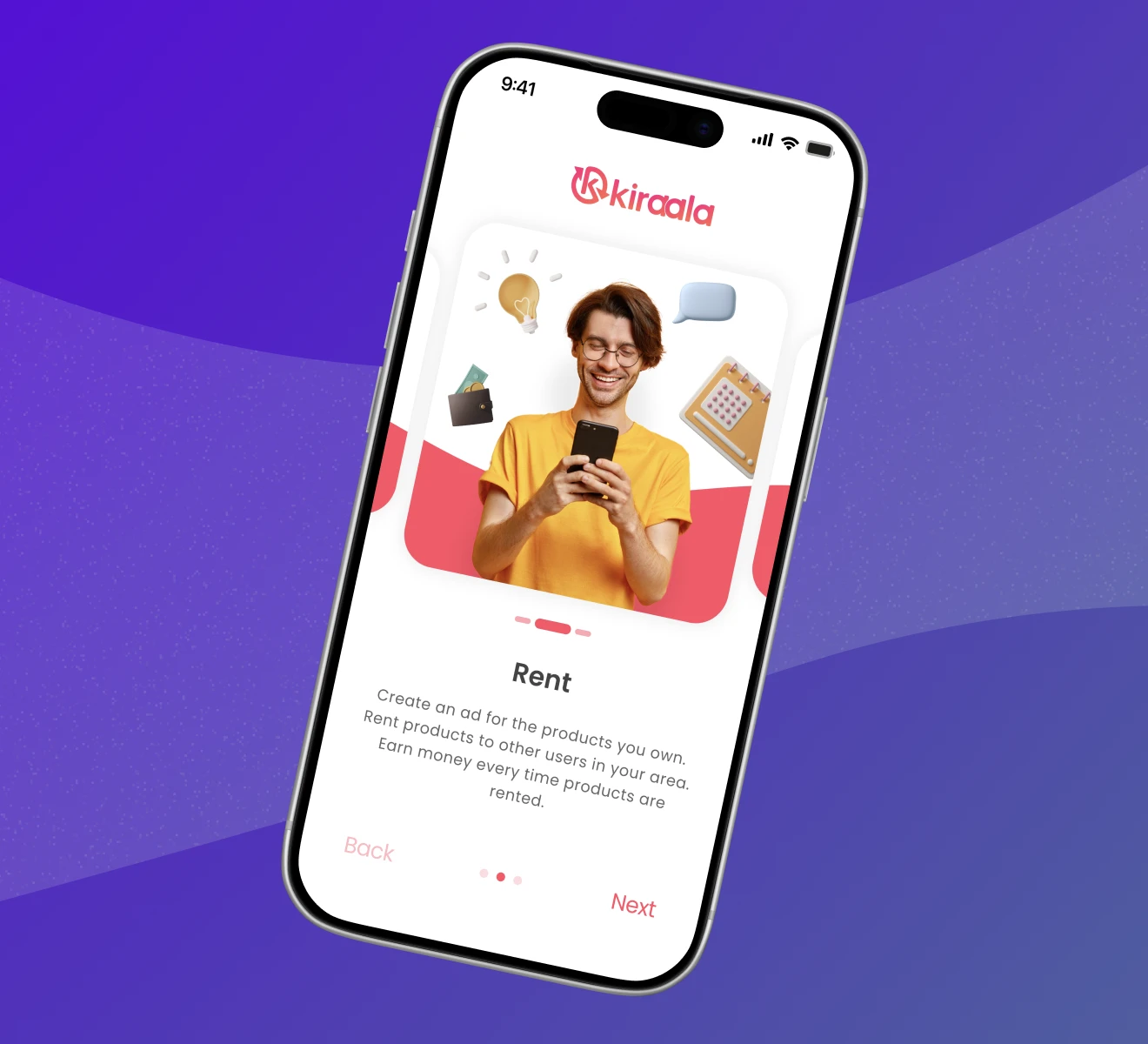
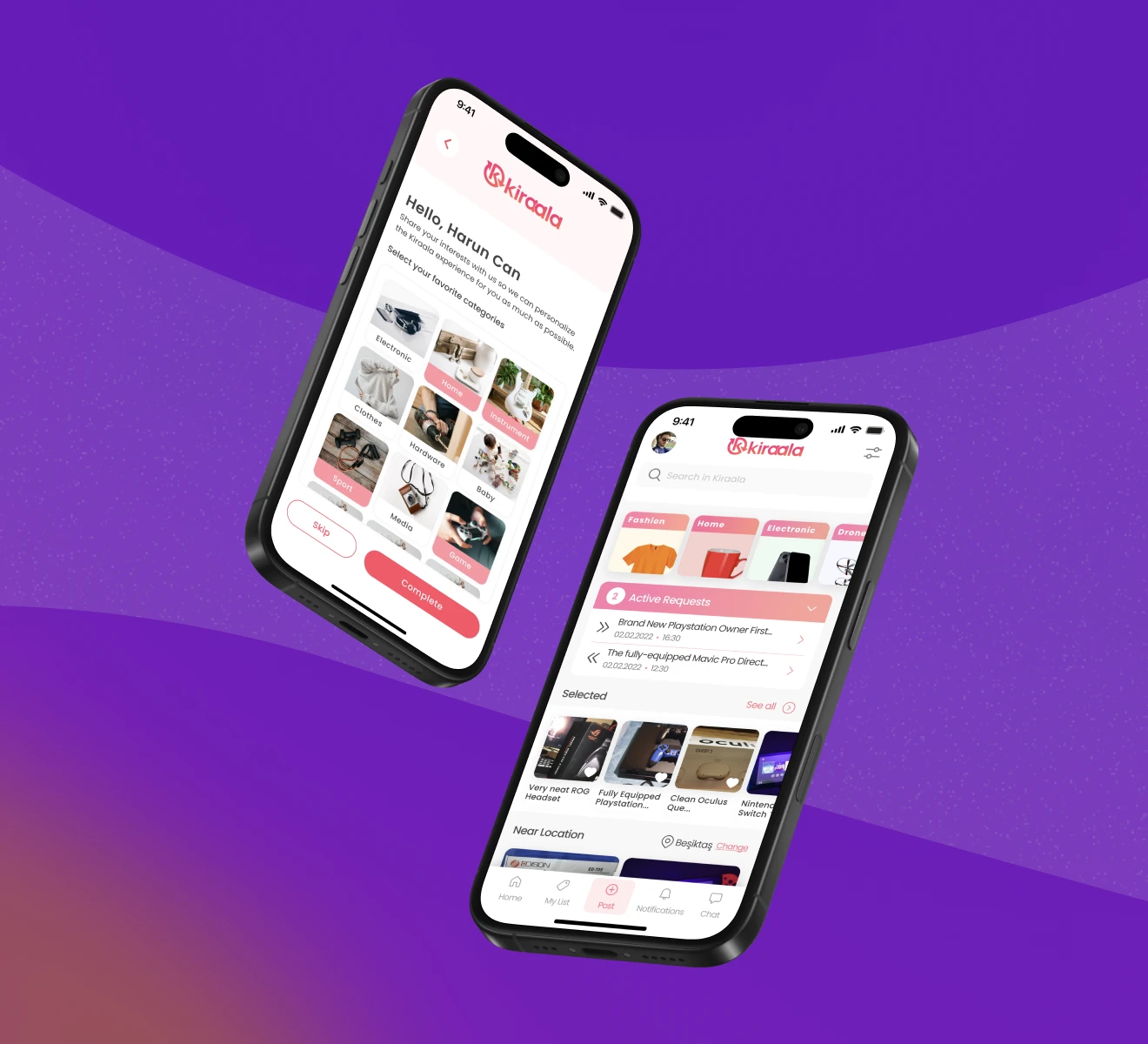
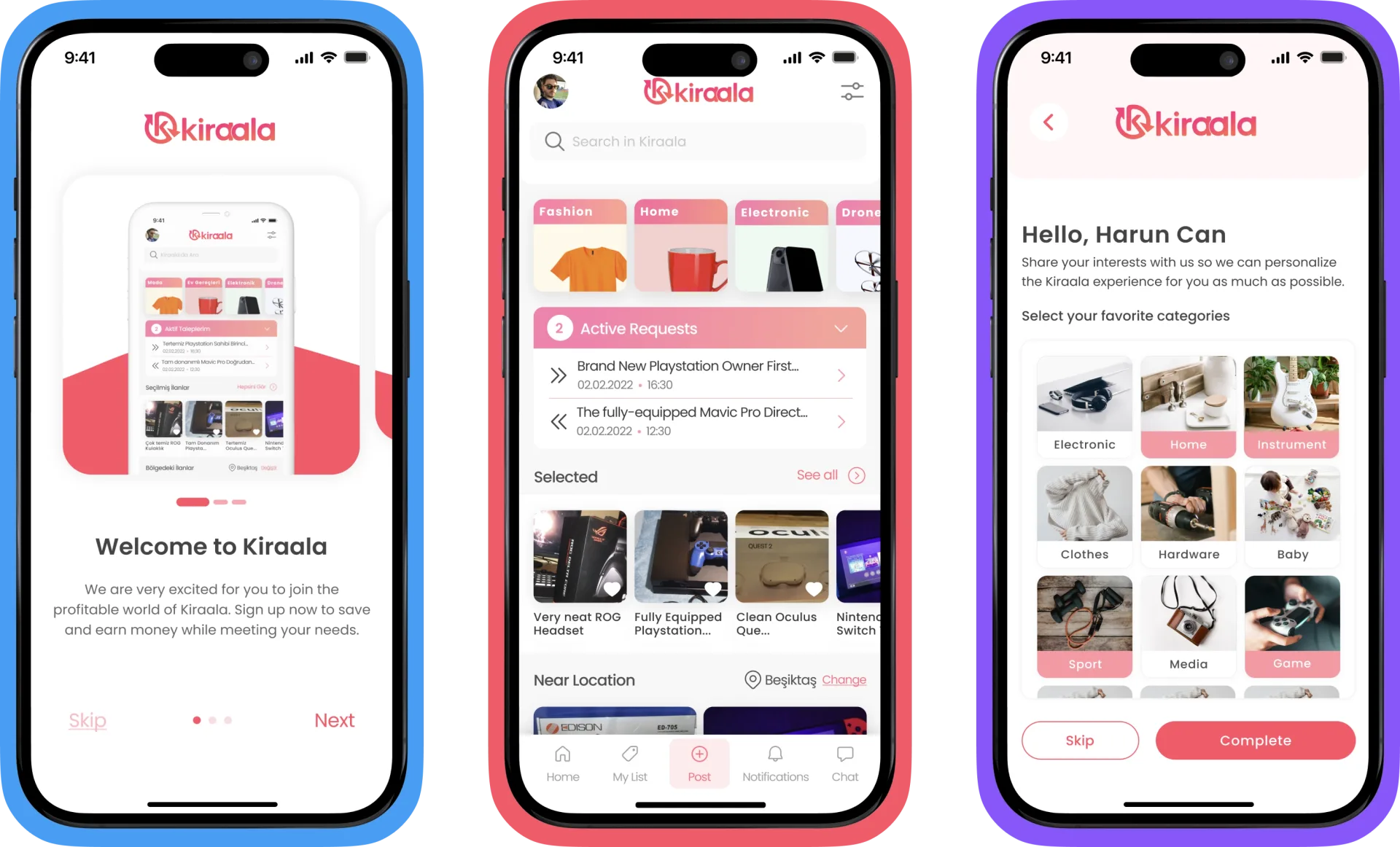
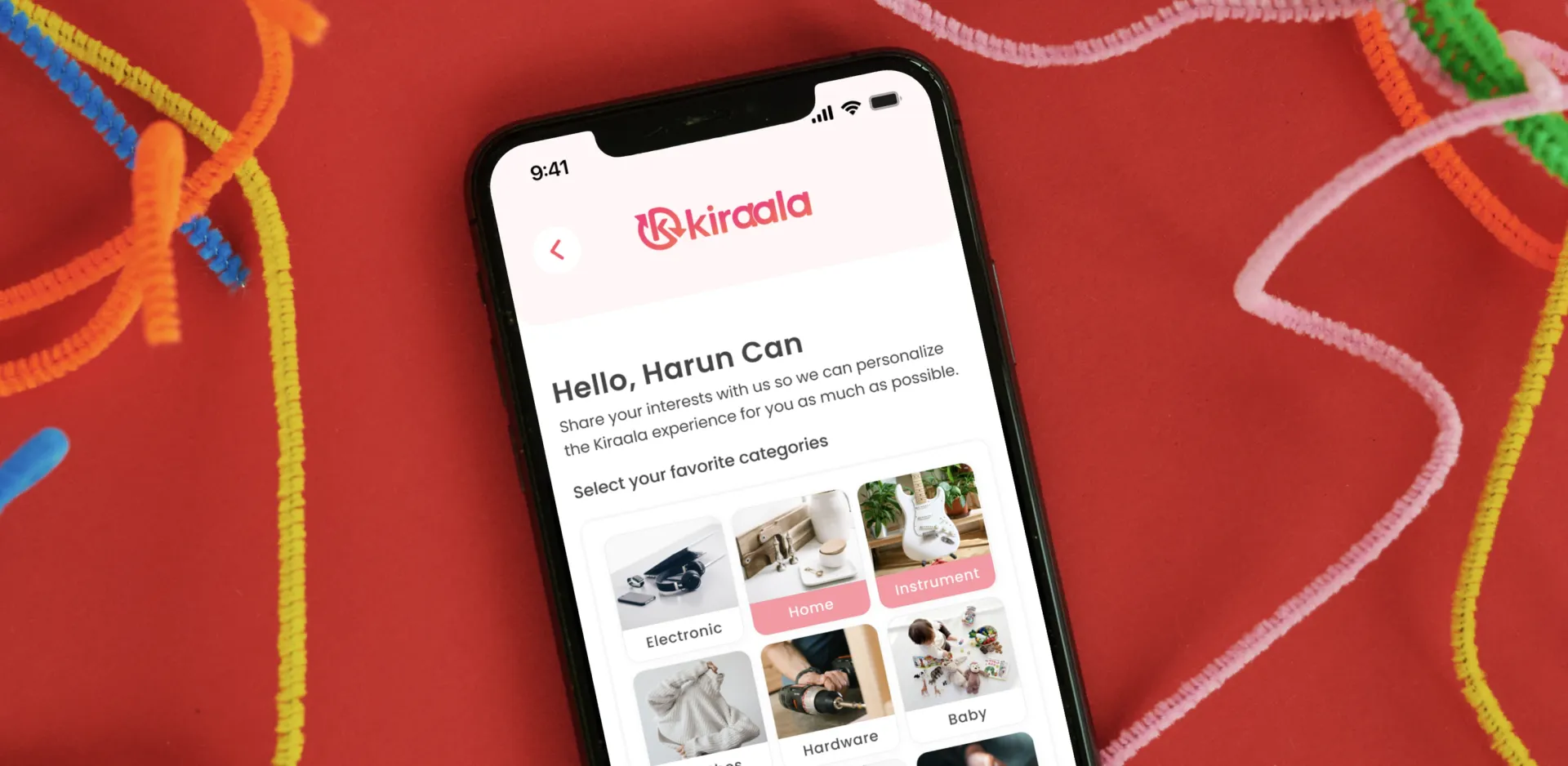
Onboarding that earns personalization. The onboarding carousel explains the platform in three slides: Welcome, Rent (earn from what you own), and Borrow (find what you need at a fraction of the cost). The category selection step immediately following asks users to select their favorite categories from a visual grid: Electronic, Home, Instrument, Clothes, Hardware, Baby, Sport, Media, Game. This single step powers the personalized home feed from the user's first session.
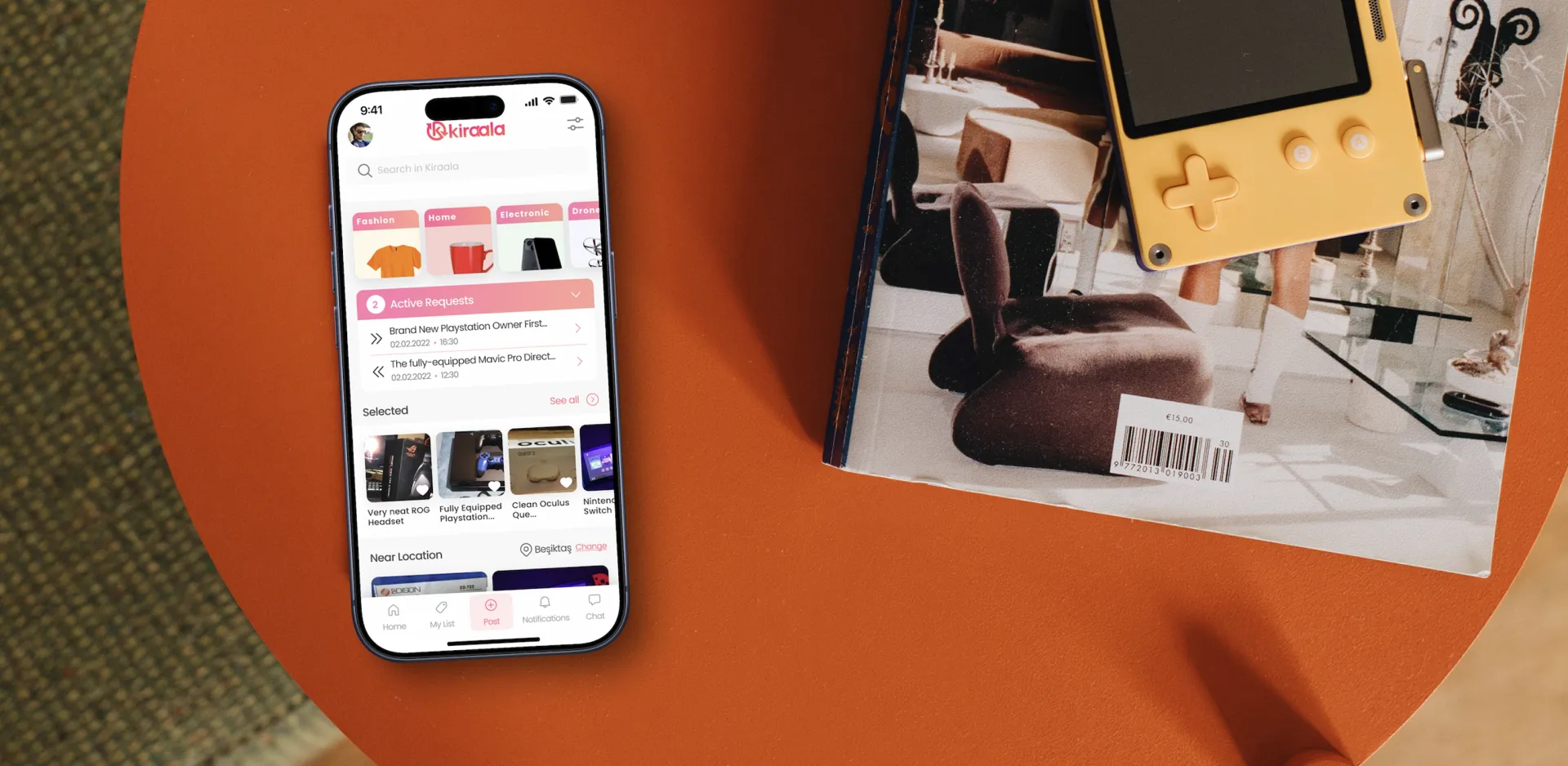
A home feed built around real demand. The home feed leads with Active Requests: listings where users have already expressed interest, surfaced at the top with appointment times. Below that, Selected items (curated for the user's categories) and Near Location listings (filtered by the user's neighborhood, with a one-tap change option). The category chip bar at the top provides fast filtering: Fashion, Home, Electronic, Drone, and more.
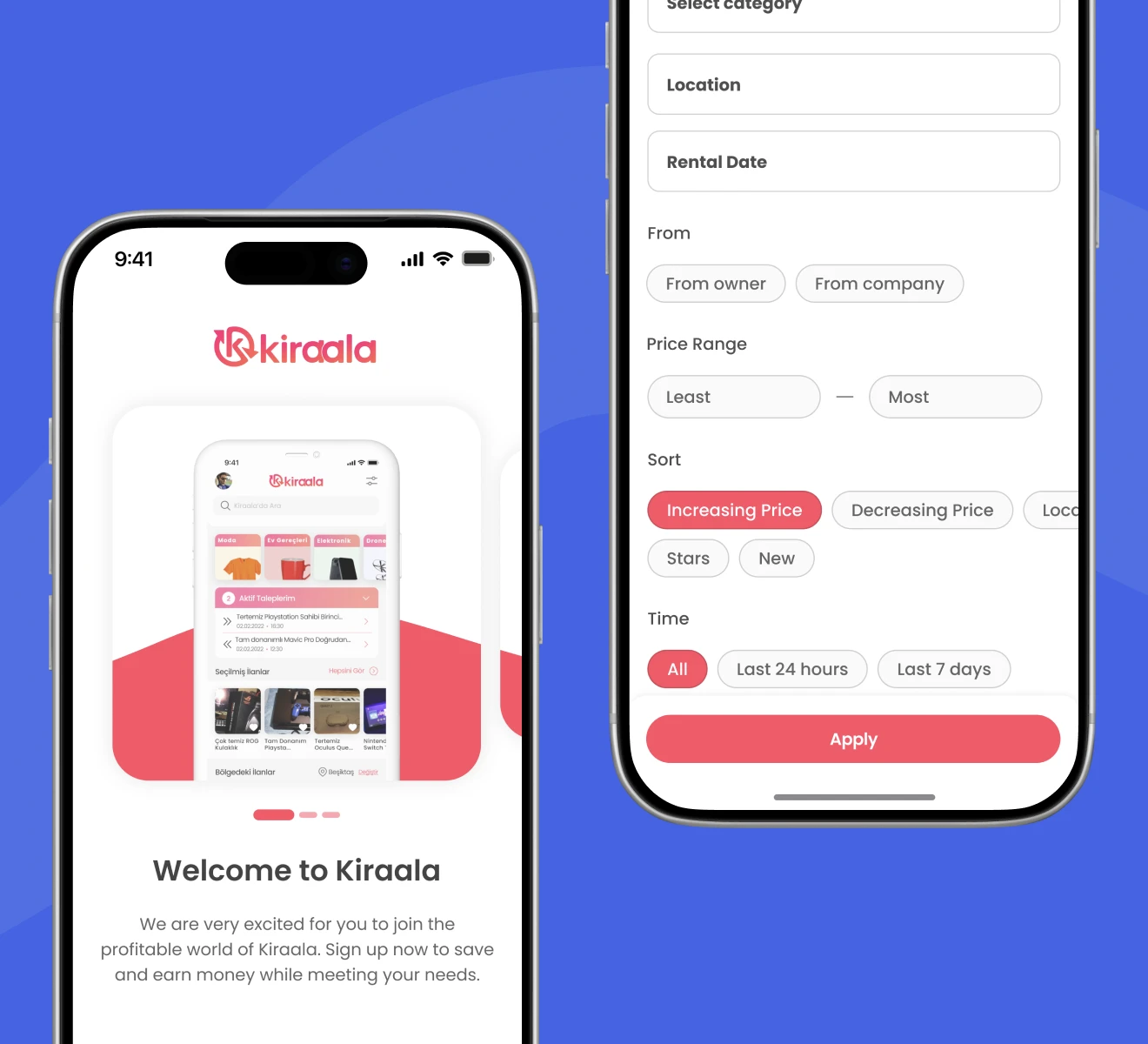
Search and filter with real parameters. The Kiraala filter sheet covers the full decision set a renter needs: category, location, rental date, source (from owner or from company), price range (min to max slider), sort order (price ascending, price descending, location, stars, newest), and time filter (all, last 24 hours, last 7 days). These parameters reflect how renters actually make decisions, not a generic filter template.
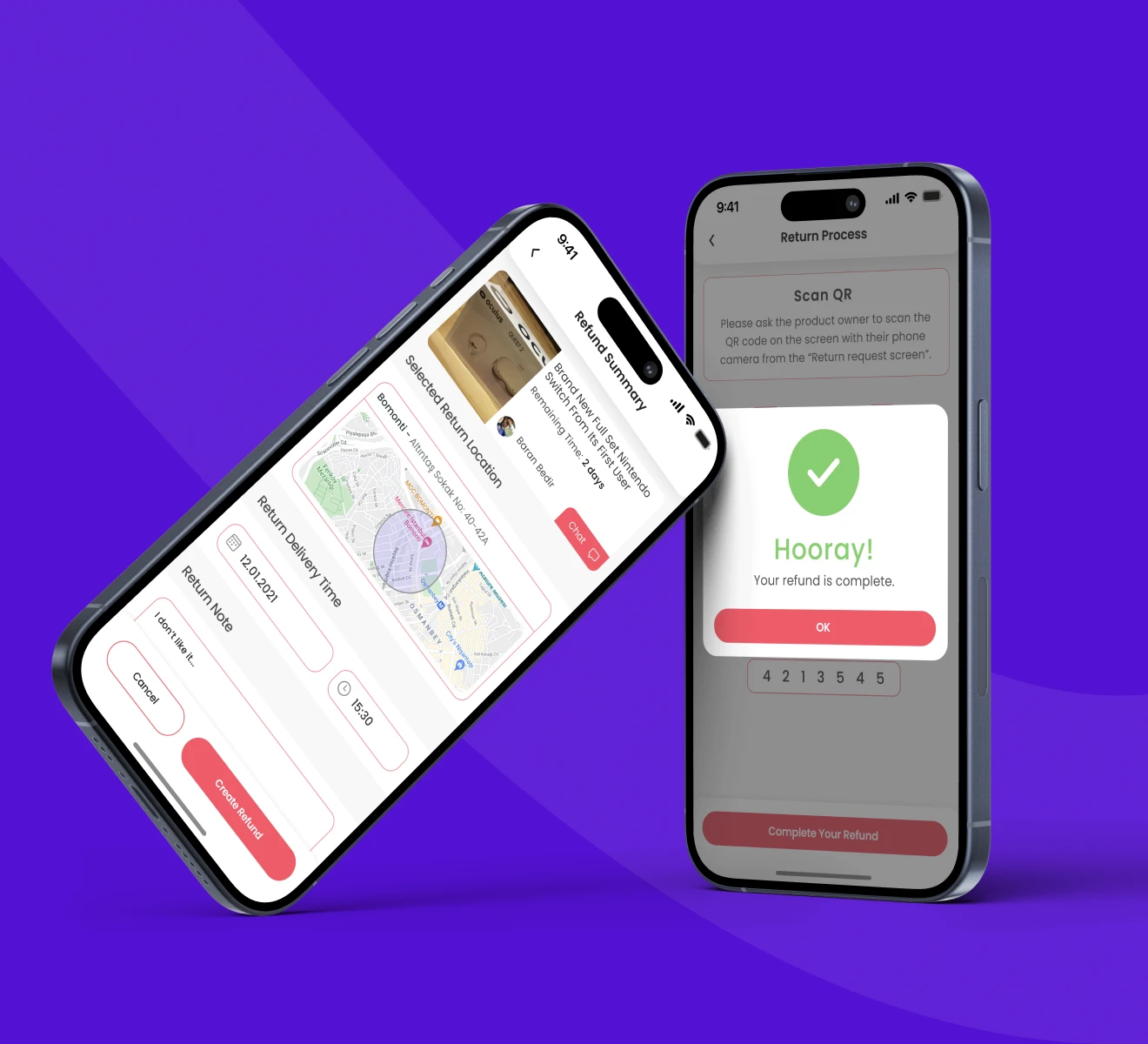
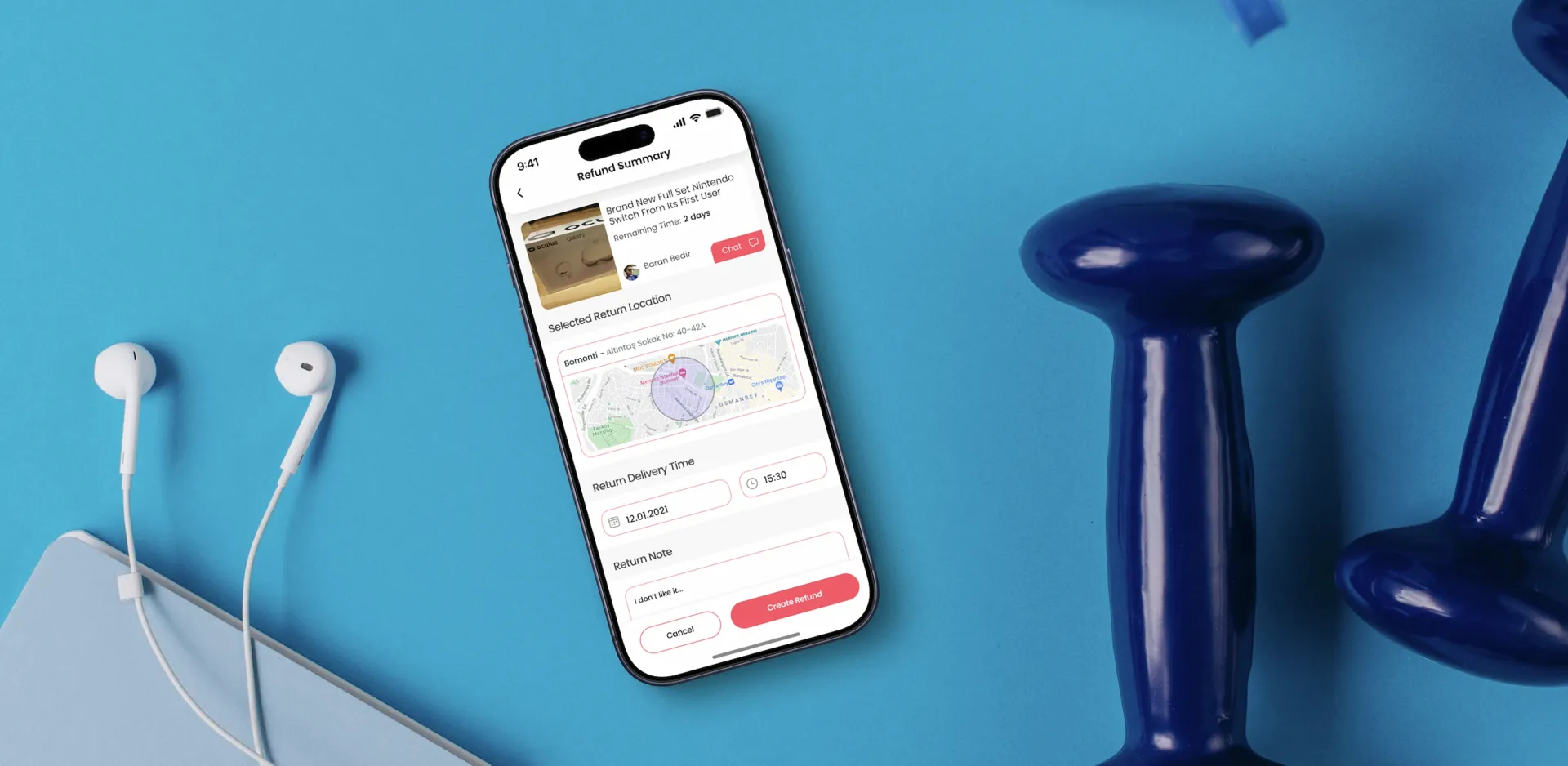
Return flow: three screens, verified handoff. When a rental approaches its end date, the renter initiates a return from the Refund Summary screen: they confirm the item, select the return location from a map (showing the agreed return address), set the return delivery time, and optionally add a return note. The lender then scans the renter's QR code from the Return Process screen. On confirmation, both parties see "Hooray! Your refund is complete." That deliberate moment of closure signals the transaction is finished.
 Kiraala: Designing a Peer-to-Peer Rental Marketplace for the Circular Economy · The Solution
Experience Highlights
Category personalization at onboarding. After the three-slide welcome carousel, the app presents a grid of rental categories with lifestyle photography: Electronic, Home, Instrument, Clothes, Hardware, Baby, Sport, Media, Game. Users tap to select their interests. The "Skip" and "Complete" options are both available, respecting users who do not want to personalize. Selected categories are highlighted immediately, making the interaction feel responsive and rewarding.
Active Requests on the home feed. The most time-sensitive items appear at the top of the home feed in a collapsible accordion: listings where the user has made an inquiry, with scheduled appointment times. This surfaces actionable items without requiring the user to navigate to a separate inbox. The appointment time (date and hour) is shown directly in the list item.
Near Location with neighborhood context. The home feed shows listings near the user's current or selected neighborhood, with the location name (Beşiktaş, for example) displayed prominently and a one-tap "change" link for users who want to browse a different area. This makes location-based discovery explicit rather than invisible.
Refund Summary with map and timeline. The return initiation screen shows the full transaction context: the item name and thumbnail, the remaining rental time, the lender's identity, a map of the agreed return location with the address overlaid, the return delivery date and time (editable), and a free-text note field. The "Create Refund" button is a primary action at the bottom. Nothing is hidden or requires scrolling past relevant information.
 Kiraala: Designing a Peer-to-Peer Rental Marketplace for the Circular Economy · Experience Highlights
Design Process
In a peer-to-peer rental marketplace, the design is not just a layer on top of the product. The design is what makes the product viable. A person will not rent their camera to a stranger because the app is well-designed. But they will decline to rent it if the app makes the process feel opaque, risky, or confusing. The Experience Loop was applied as a framework for reducing perceived risk at every step.
Focus: The north star was "makes renting from a stranger feel as safe and natural as buying from a shop." Every screen was evaluated against this standard: does this interaction reduce uncertainty, or does it introduce it?
Research: We mapped the emotional journey of both the lender and the renter across the full rental cycle: listing creation, discovery, inquiry, agreement, handoff, rental period, and return. Each stage had distinct trust-critical moments where the design could either build or erode confidence. The QR return flow, the map-based return location confirmation, and the Active Requests surface on the home feed all emerged from this mapping.
Act: The visual language was designed to feel approachable and energetic without sacrificing clarity. The Kiraala brand color (coral/pink) was used as the primary action color, with white backgrounds and clean typography throughout. Category imagery was lifestyle-forward, showing products in context rather than as catalogue shots.
Measure: Trust signals were embedded at every stage: verified user indicators, appointment-time confirmations in the Active Requests list, the map showing the return location, and the "Hooray!" completion moment that provides explicit closure. Each of these was designed to be measurable as a trust proxy.
Evolve: The filter system was designed to be extensible: new sort parameters, additional source types (from owner, from company, and future tiers), and new time filters can be added without restructuring the sheet. The category grid in personalization and home feed was similarly designed to accommodate new categories as the platform grows.
 Kiraala: Designing a Peer-to-Peer Rental Marketplace for the Circular Economy · Design Process