

We design low-impact, inclusive product experiences that last.
Sustainable UX means efficient, accessible and long-lasting digital experiences that benefit users, businesses, and the planet.
Every byte becomes electricity. Electricity becomes emissions.
From data centers to devices, the bytes we design have a physical cost. Sustainable UX means conscious design decisions that reduce environmental impact while improving the experience. As a certified B Corporation, we integrate this into every phase of the Experience Loop, from research to delivery.
Product design impact
Six principles that guide how we reduce impact through design decisions.
Low-impact Performance
Fewer bytes mean less energy, better battery life, data fairness.
Performance budgets, code-splitting, AVIF/WebP images, system fonts.
Faster loads with a smaller footprint.
Interaction Efficiency
Fewer steps reduce compute cycles and save user time.
Task mapping, progressive disclosure, optimistic UI.
Shorter workflows, fewer server requests.
Inclusive by Design
Universal access avoids costly retrofits, maximizes benefit.
WCAG 2.1 AA, keyboard-first, reduced-motion support.
Broader reach from day one, fewer rework cycles.
Longevity via Systems
Durable interfaces prevent redesign churn and waste.
Token-driven design systems, versioned components, docs.
Scalable updates, minimal maintenance overhead.
Responsible Media
Images and video dominate page weight and energy use.
No autoplay video, lazy loading, optimized formats, prefers-reduced-motion.
Major byte reductions, same experience.
Evidence-led Scope
Unused features are environmental and cognitive waste.
Experience Loop discovery, usage analytics, feature sunset policy.
Only what users need, simpler codebases.
The studio runs the same way.
100% remote-first
No daily commutes, no office energy overhead.
Digital deliverables
Cloud design systems, versioned docs, zero print.
Long-term partnerships
Systems that last years, not months. Less churn, less waste.
Ethical client selection
Impact-first partners, aligned with B Corp values.
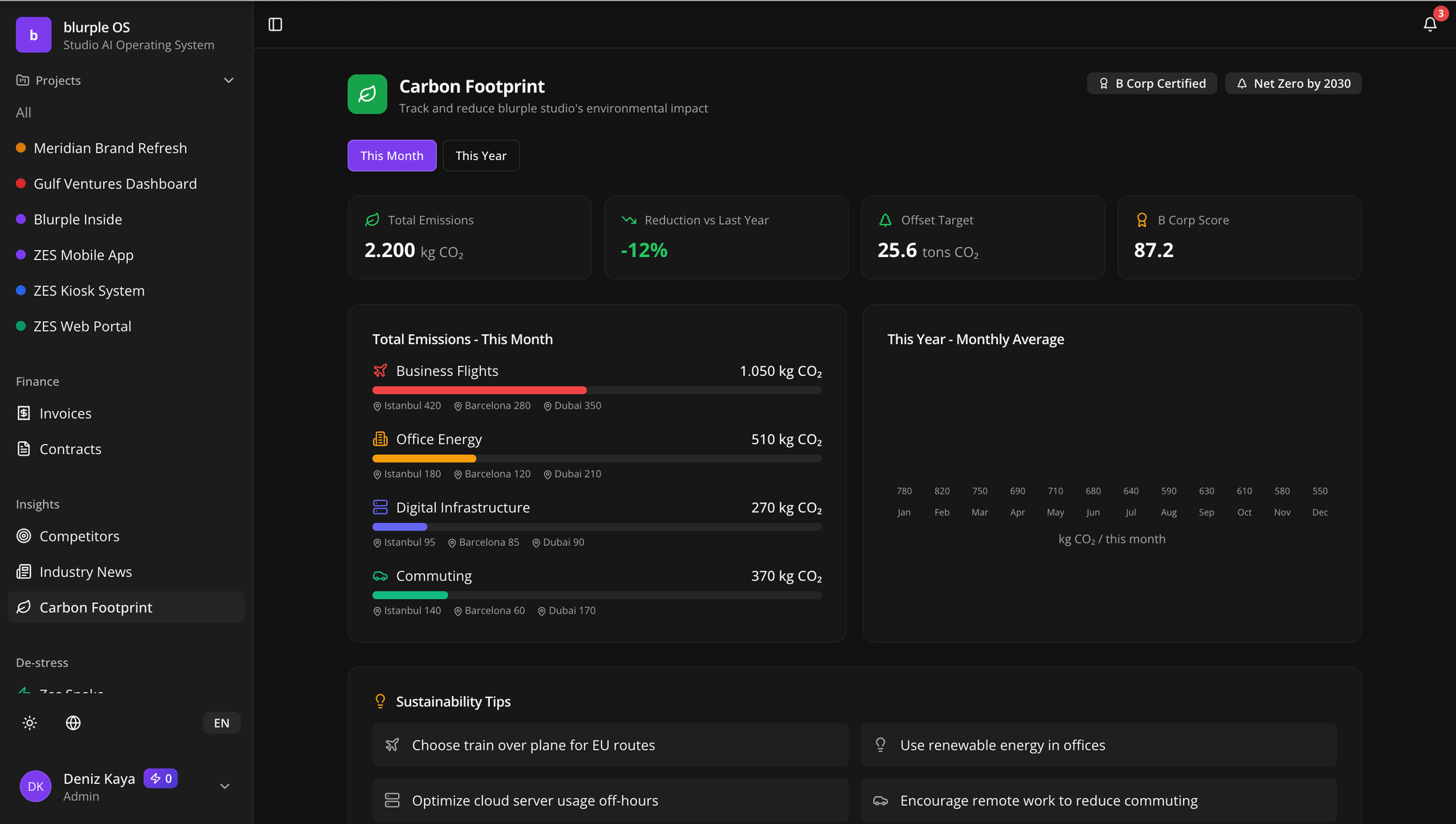
Carbon tracking lives inside blurpleOS.
We treat carbon like any other product metric: visible, tracked, reviewed alongside the work.
Verified performance, not a pledge.
As a certified B Corporation we meet the highest standards of verified social and environmental performance, public transparency and legal accountability.
- Carbon footprint measured and reviewed quarterly
- 100% renewable-powered servers and green hosting
- WCAG 2.1 AA commitment across all digital products

Live page metrics
MEASURED NOW, ON THIS PAGE- Page weight
- measuring…
- CO₂ per view
- …
- Model
- sustainablewebdesign.org