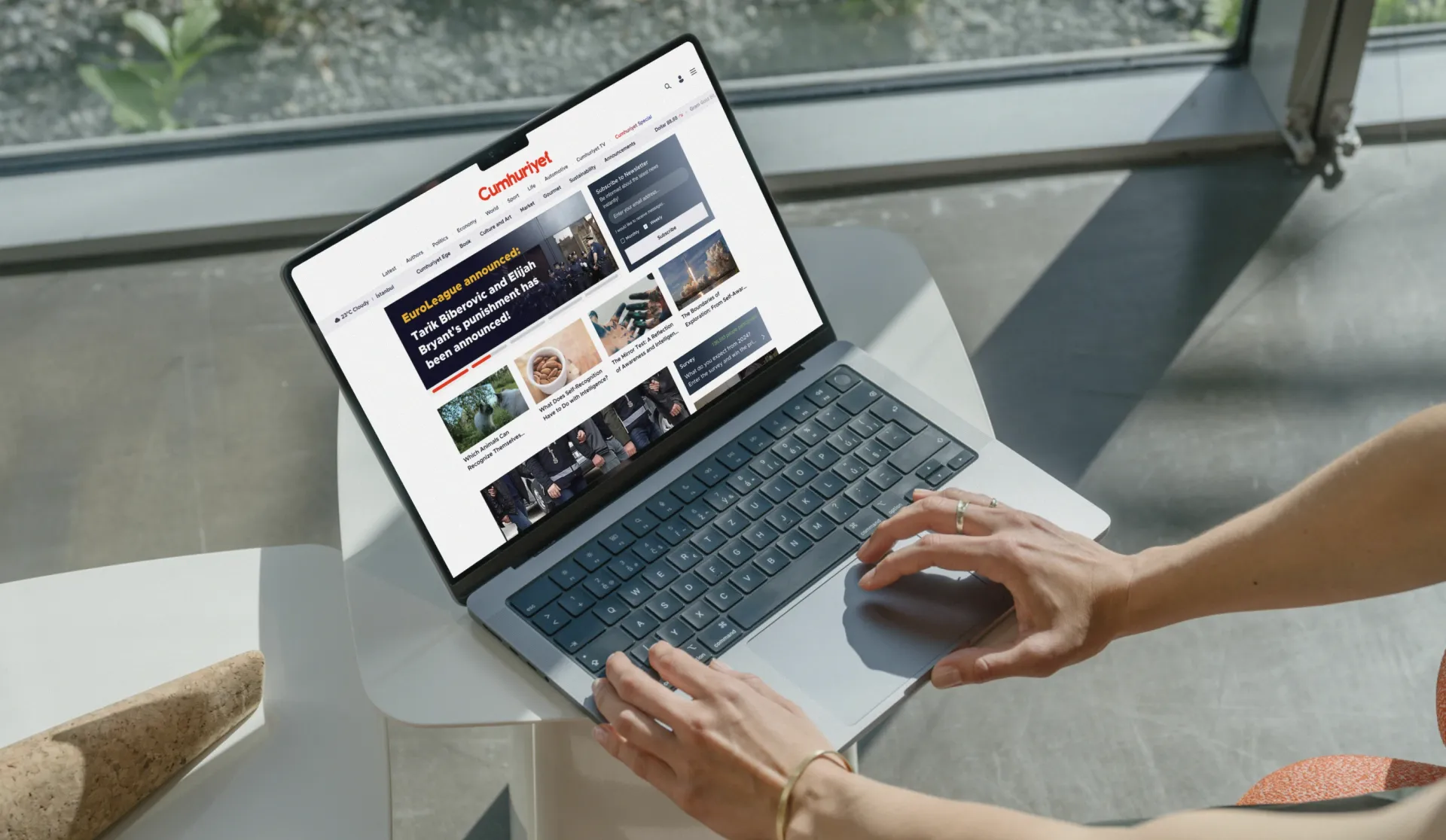
Turning a national environmental mandate into a rewarding, citizen-first digital experience.
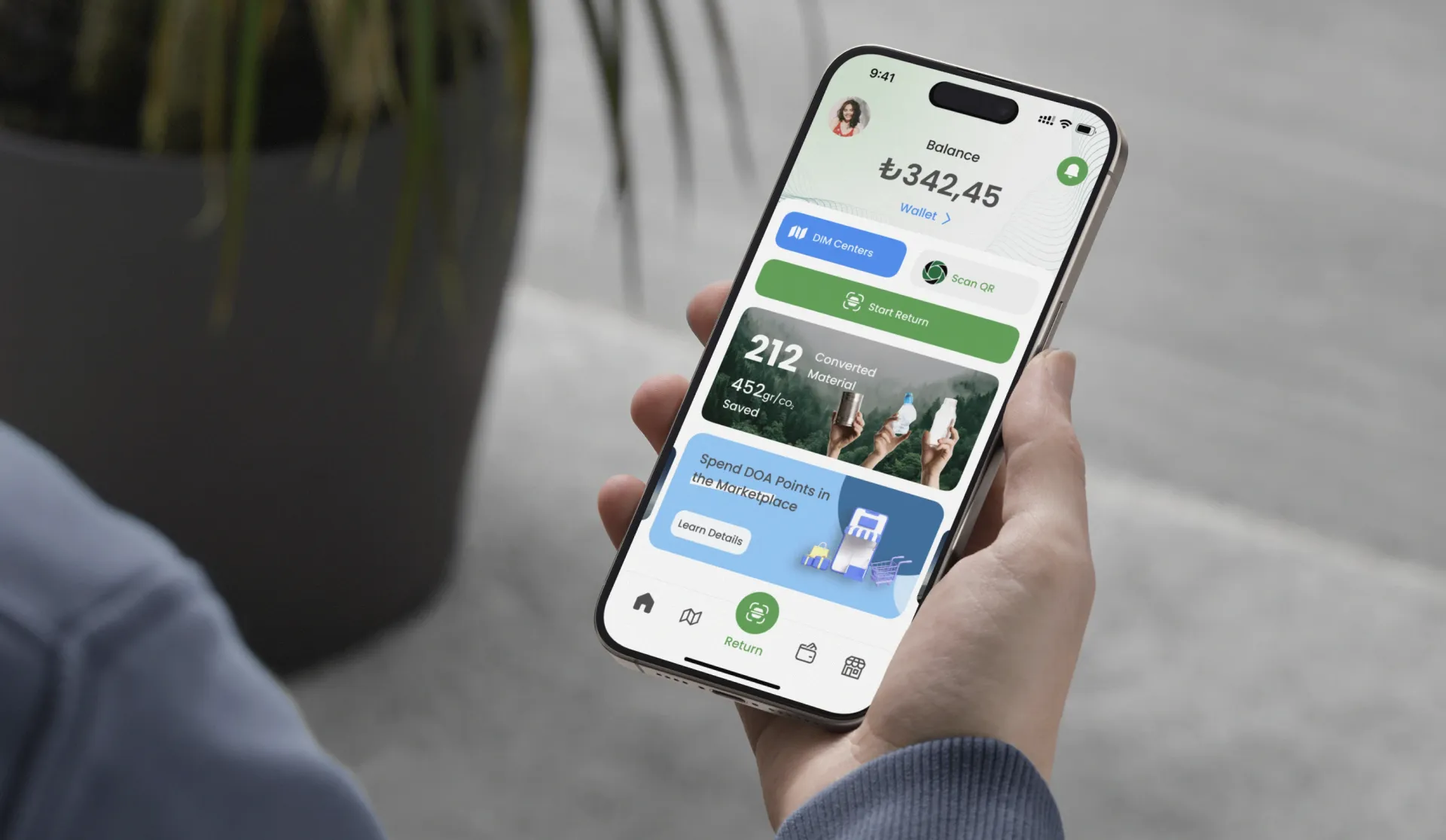
DOA is Türkiye's national deposit return system, developed by Türkiye Çevre Ajansı (TÜÇA) as part of the Ministry of Environment's circular economy program. When citizens return glass, plastic, or metal packaging to DIM (Depozito İade Merkezi) machines, they receive a cash refund. DOA is the official app that makes this system accessible, trackable, and rewarding: the first of its kind in Türkiye.
Türkiye had never run a national deposit return system before. The infrastructure existed, machines were being deployed, but the digital layer was missing. Citizens needed to understand what to return, where to go, how to get paid, and why it mattered. The challenge was not just designing an app. It was designing the public's first encounter with an entirely new civic recycling behavior.
The DOA app was designed from research to production: from citizen journey mapping and stakeholder workshops to a fully shipped iOS and Android application. It handles the entire deposit return flow, including product scanning, DIM station discovery, wallet management, and environmental impact tracking, all in one coherent experience.
The Challenge
Türkiye's national packaging deposit legislation (DYS) was signed into law, and within months, machines were being installed across cities. But a deposit return system only works if people use it. And people only use it if they understand it.
A behavior that did not exist yet. Unlike EV charging or food delivery, deposit returns had no digital precedent in Türkiye. Citizens did not know which products were eligible, where to find machines, or how to claim their refund. First-time behaviors require unusually clear UX.
The complexity beneath the surface. Behind the simple act of returning a bottle lies layers of system logic: DYS barcodes, machine occupancy states, Bluetooth device pairing, wallet regulations, and real-time transaction processing. Each had to be made invisible to the user while remaining technically accurate.
A civic product, not just a commercial one. Designed for the Ministry of Environment, DOA needed to serve Türkiye's entire population across age groups, digital literacy levels, and urban-rural contexts. The margin for confusion was zero.
 DOA Mobile App: Designing Türkiye's First Deposit Return System · The Challenge
The Solution
We centered the experience on a single insight from research: citizens do not care about recycling regulations. They care about three things: getting paid, not getting confused, and feeling like they are doing the right thing.
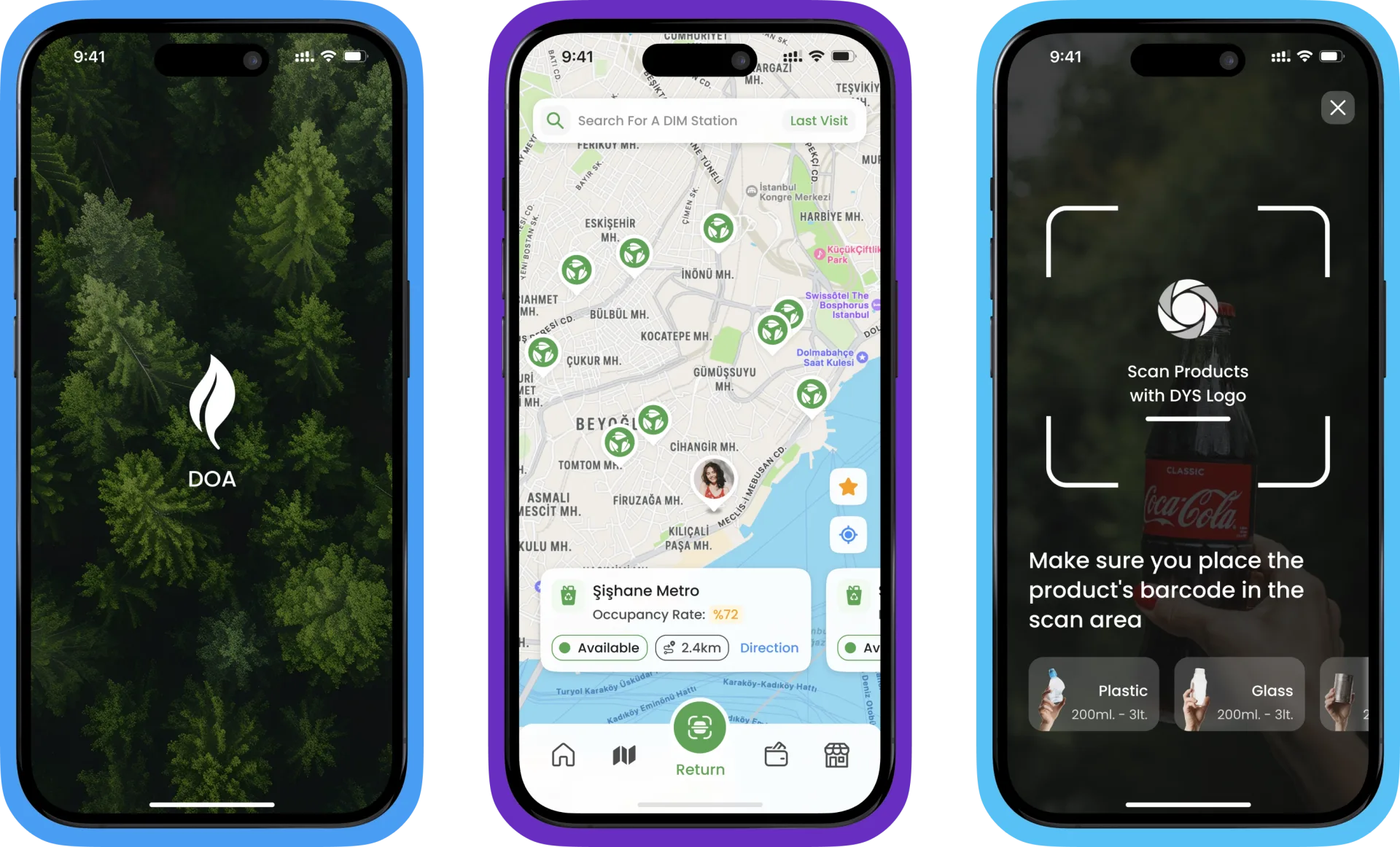
The deposit return flow as the product's backbone. Every screen, from onboarding to wallet withdrawal, was designed around the core action: scan a product, find a machine, start a return, get paid. No detours. No ambiguity about what to do next.
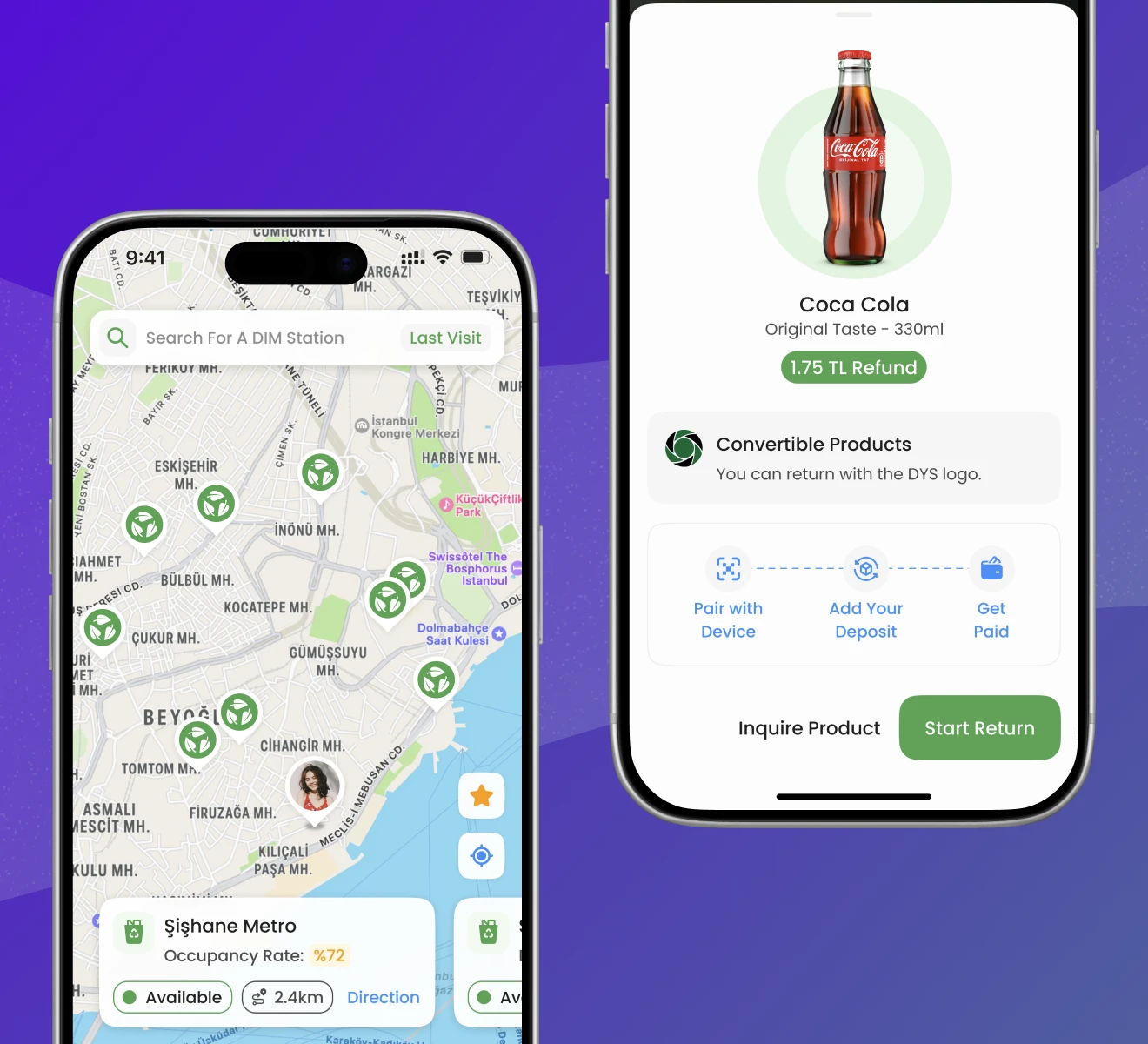
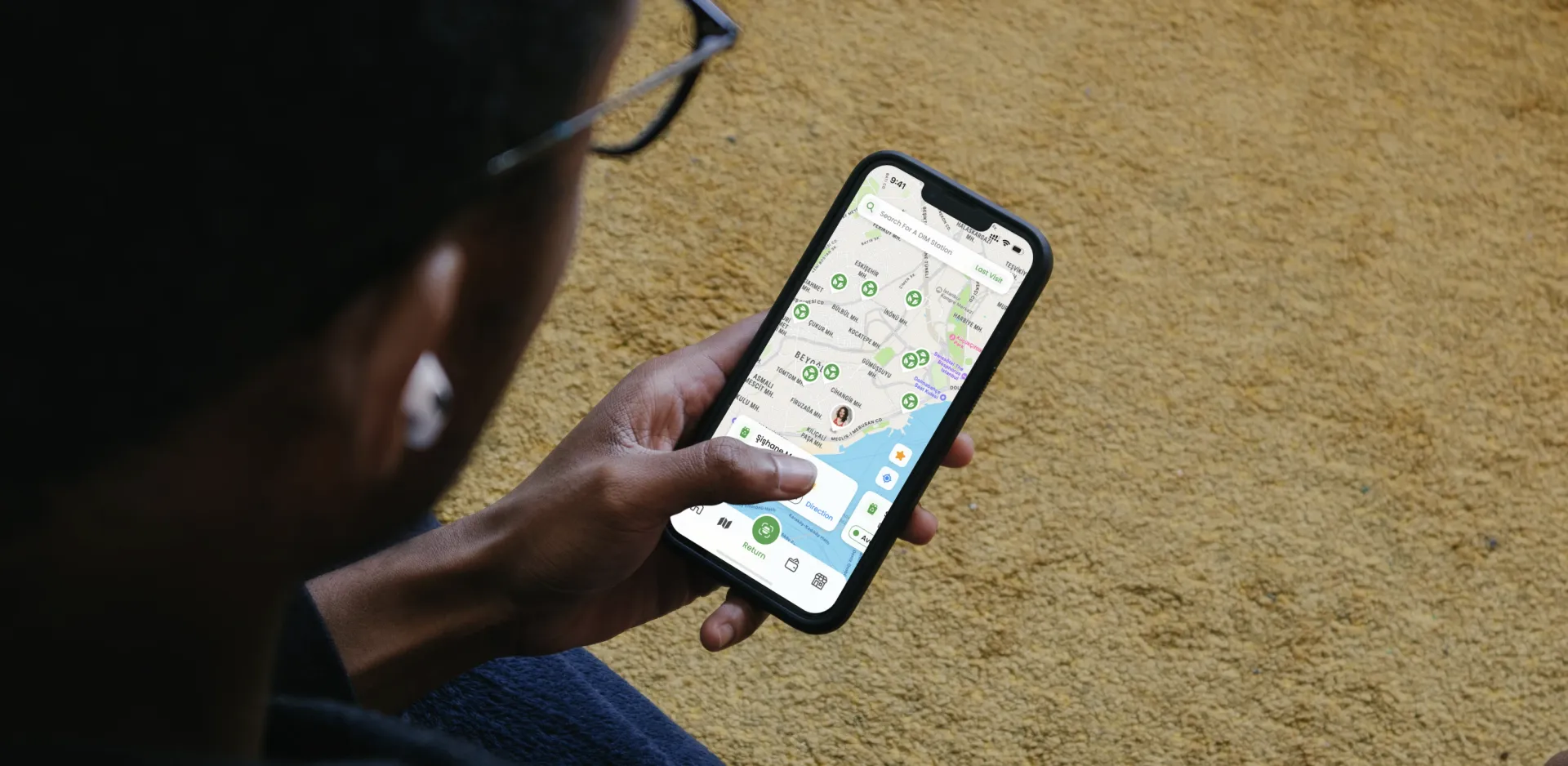
Location as confidence. The DIM station map was designed not just for navigation but for decision-making. Occupancy rates, machine availability, last visit history, and real-time status were surfaced in ways that let users commit to a return trip before leaving home.
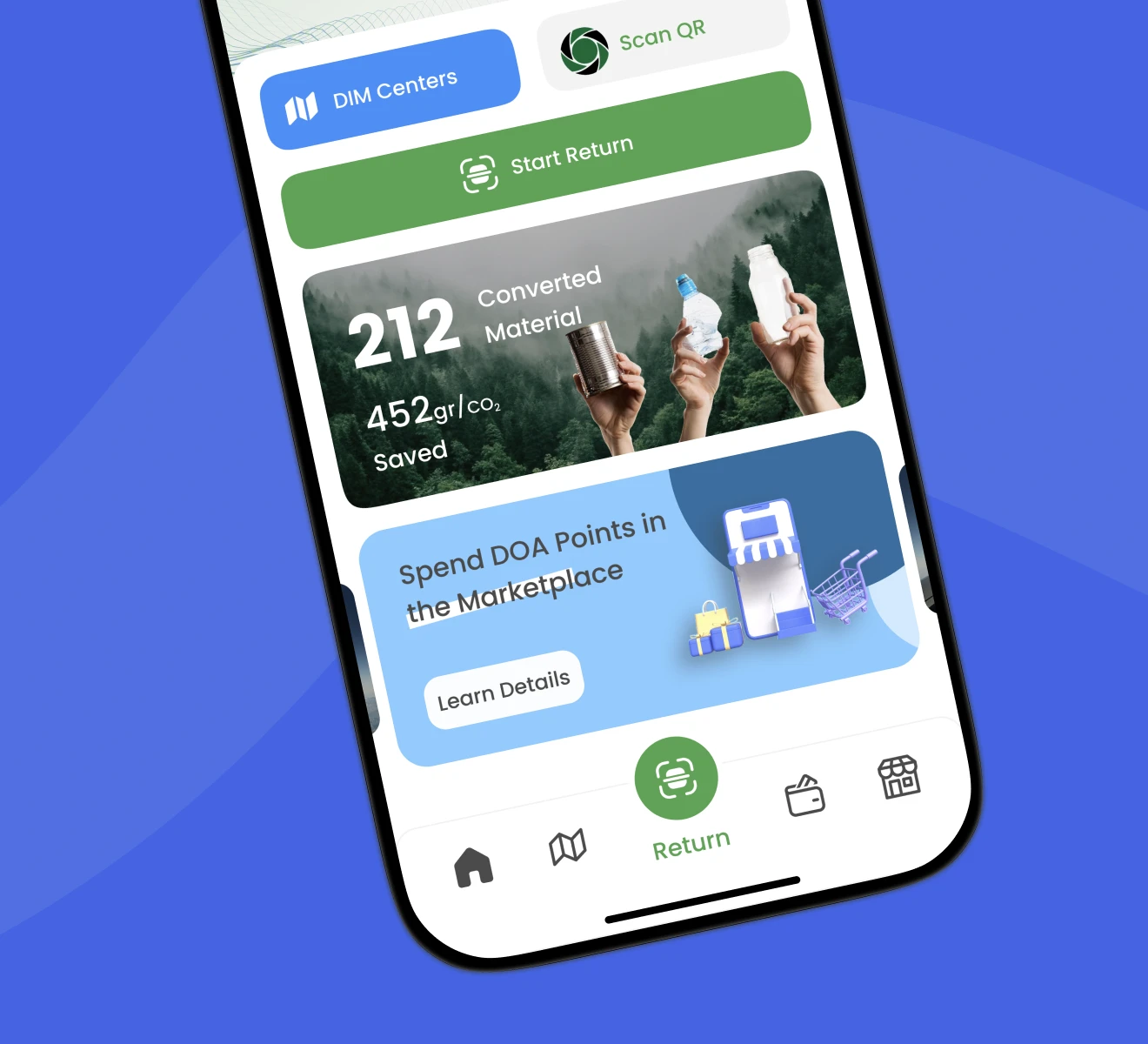
Feedback that closes the loop. After a return is completed, the app confirms both the financial transaction and the environmental one, showing grams of CO2 saved alongside the TL refunded. Two rewards, one action: money and meaning.
 DOA Mobile App: Designing Türkiye's First Deposit Return System · The Solution
Experience Highlights
Deposit Return Flow
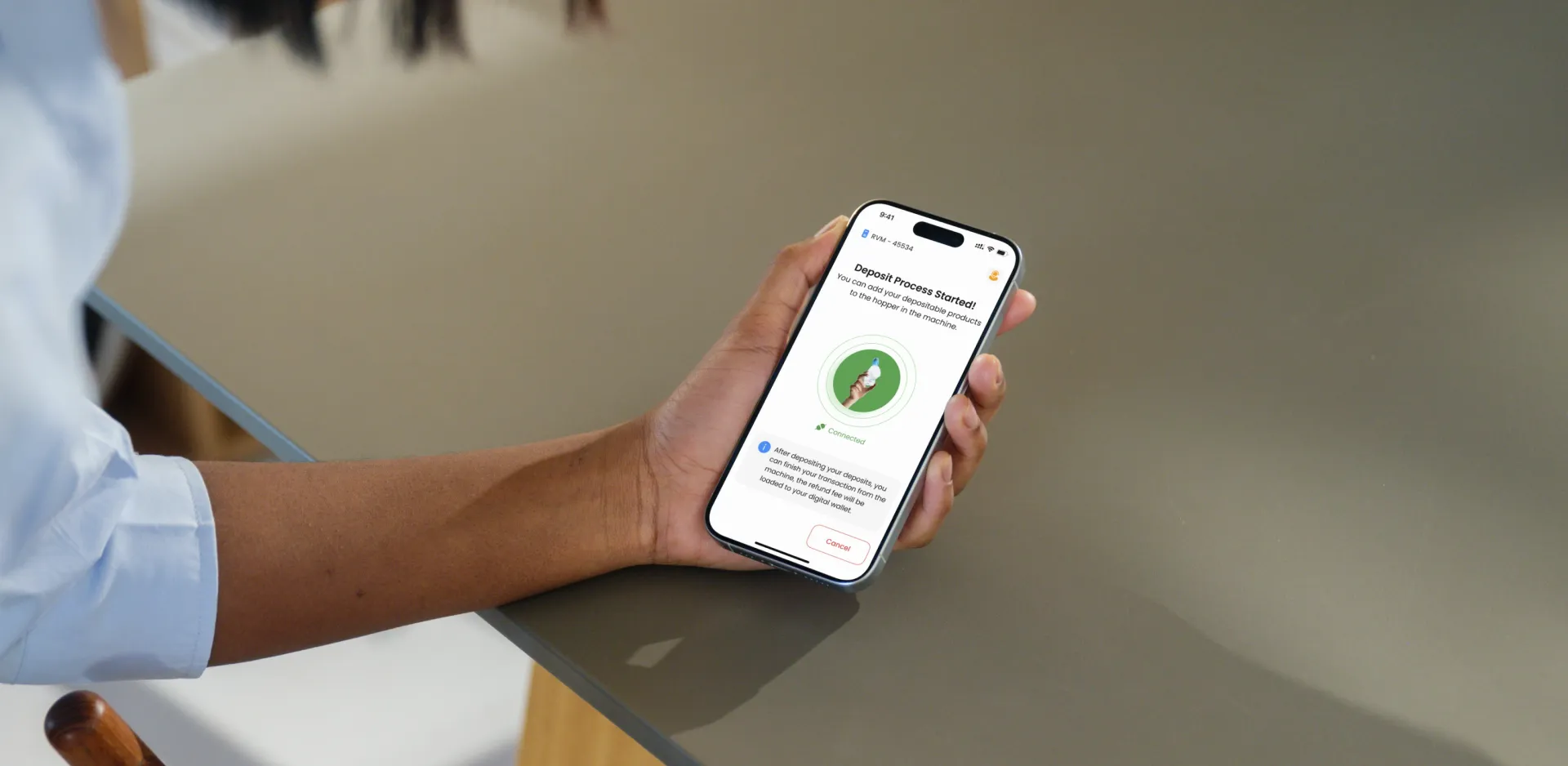
The return journey was reduced to three steps: scan product barcode, connect to DIM machine via Bluetooth, confirm deposit. The "Deposit Process Started" screen provides real-time connection status and clear instructions, eliminating the anxiety of interacting with a physical machine for the first time.
Smart Location Discovery
The map shows not just where DIM stations are, but whether they are worth visiting right now. Occupancy rates, availability status, and distance make the decision to visit a machine effortless. Users can save favorite stations and filter by last visit, behaviors validated across multiple rounds of in-person user testing.
Environmental Impact as Reward
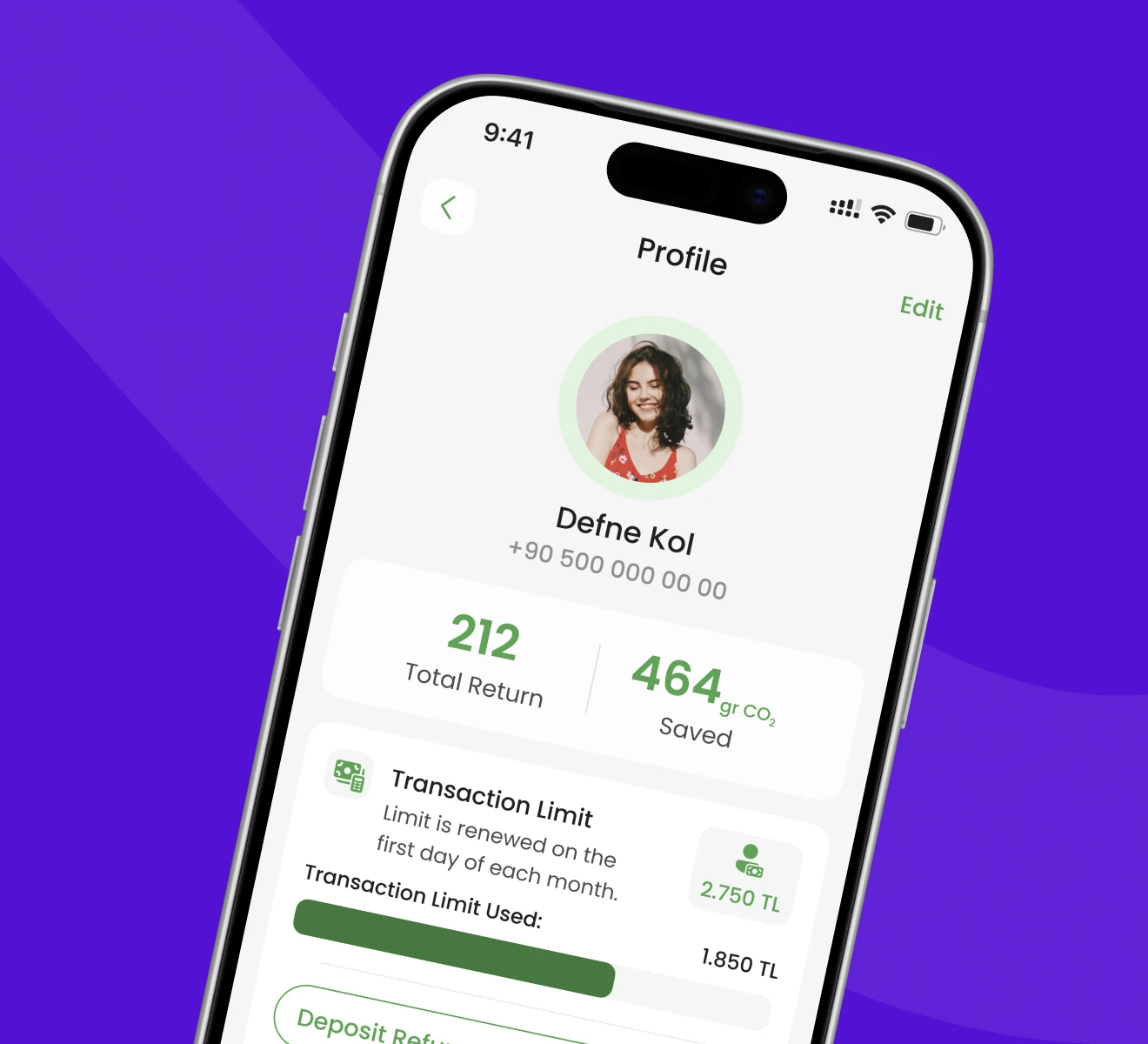
The profile screen quantifies each user's contribution in two currencies: Turkish Lira refunded and CO2 saved. Seeing "464 gr CO2 Saved" alongside total returns transforms recycling from a civic obligation into a personal achievement, a design decision grounded in behavioral research on motivation and habit formation.
 DOA Mobile App: Designing Türkiye's First Deposit Return System · Experience Highlights
Design Process
Designing DOA required building understanding of a system that did not yet exist in public consciousness. The Experience Loop gave us the structure to move fast without losing rigor.
Focus: Stakeholder workshops with TÜÇA aligned the project around a sharp north star: reduce the barrier to a citizen's first deposit return to near zero. Every subsequent decision was tested against this definition of success.
Research: We conducted extensive user interviews across age groups and cities, mapped the full citizen journey from product purchase to deposit return, and analyzed the technical constraints of DYS barcode recognition and Bluetooth machine pairing. Detailed usability sessions were run in multiple rounds throughout the project. Research revealed the critical role of perceived reward, both financial and environmental, in driving repeat behavior.
Act: The architecture was built around one primary action per screen. We designed Bluetooth pairing, barcode scanning, and map navigation as native, intuitive flows. Prototypes were tested with actual DIM machines in the field to validate interaction timing and feedback states.
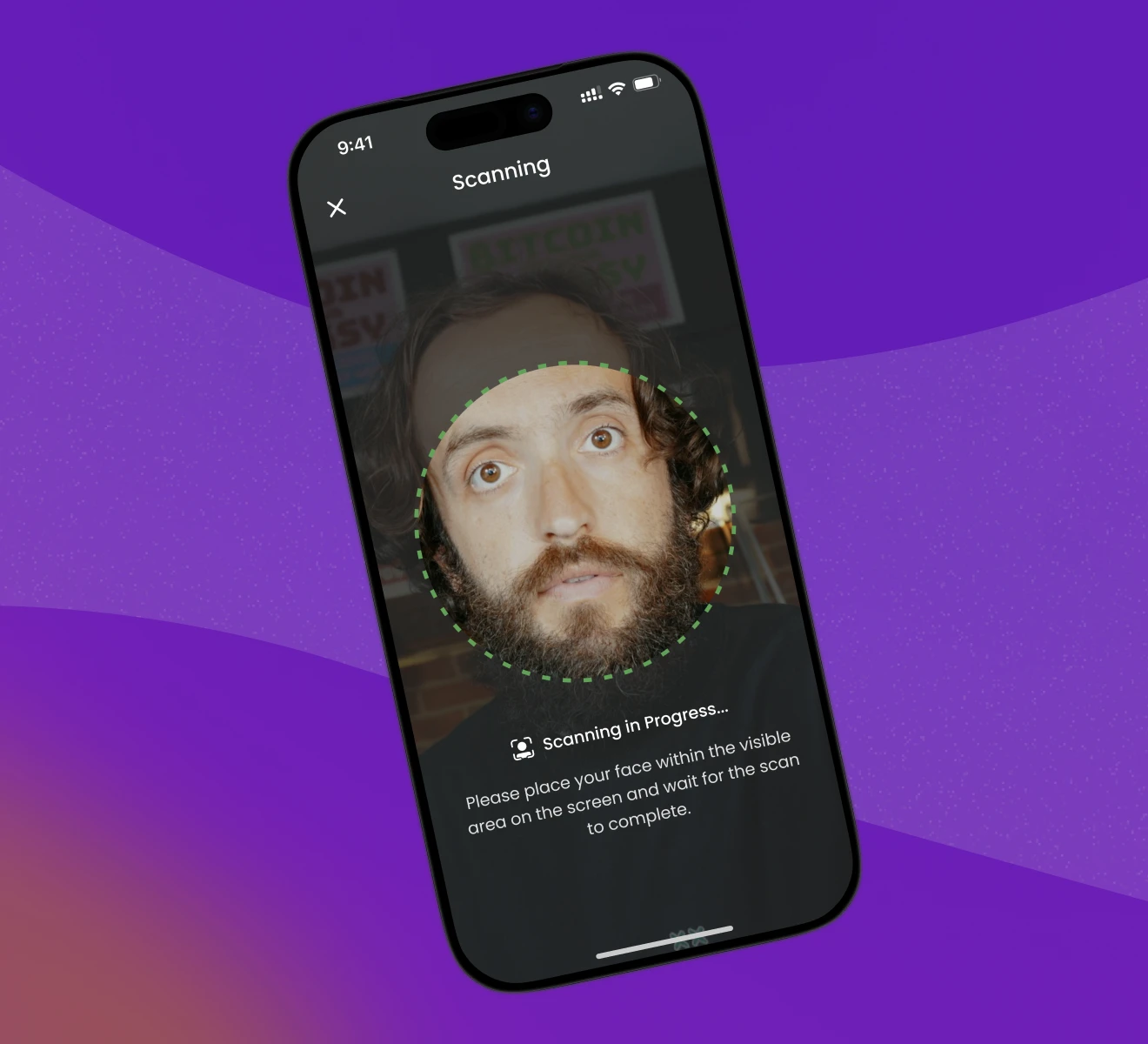
Measure: Multiple rounds of detailed user testing revealed that occupancy rate display was the single highest-impact addition to the map screen. Testing also surfaced the need for biometric verification during wallet setup, a compliance requirement that needed to feel effortless rather than intrusive.
Evolve: The design system covers both consumer (DOA) and operator (DOA Business Partner) interfaces, sharing visual logic while serving entirely different task structures. This dual-product design system was a core deliverable and ensures long-term scalability.
DOA Mobile App: Designing Türkiye's First Deposit Return System · Design Process