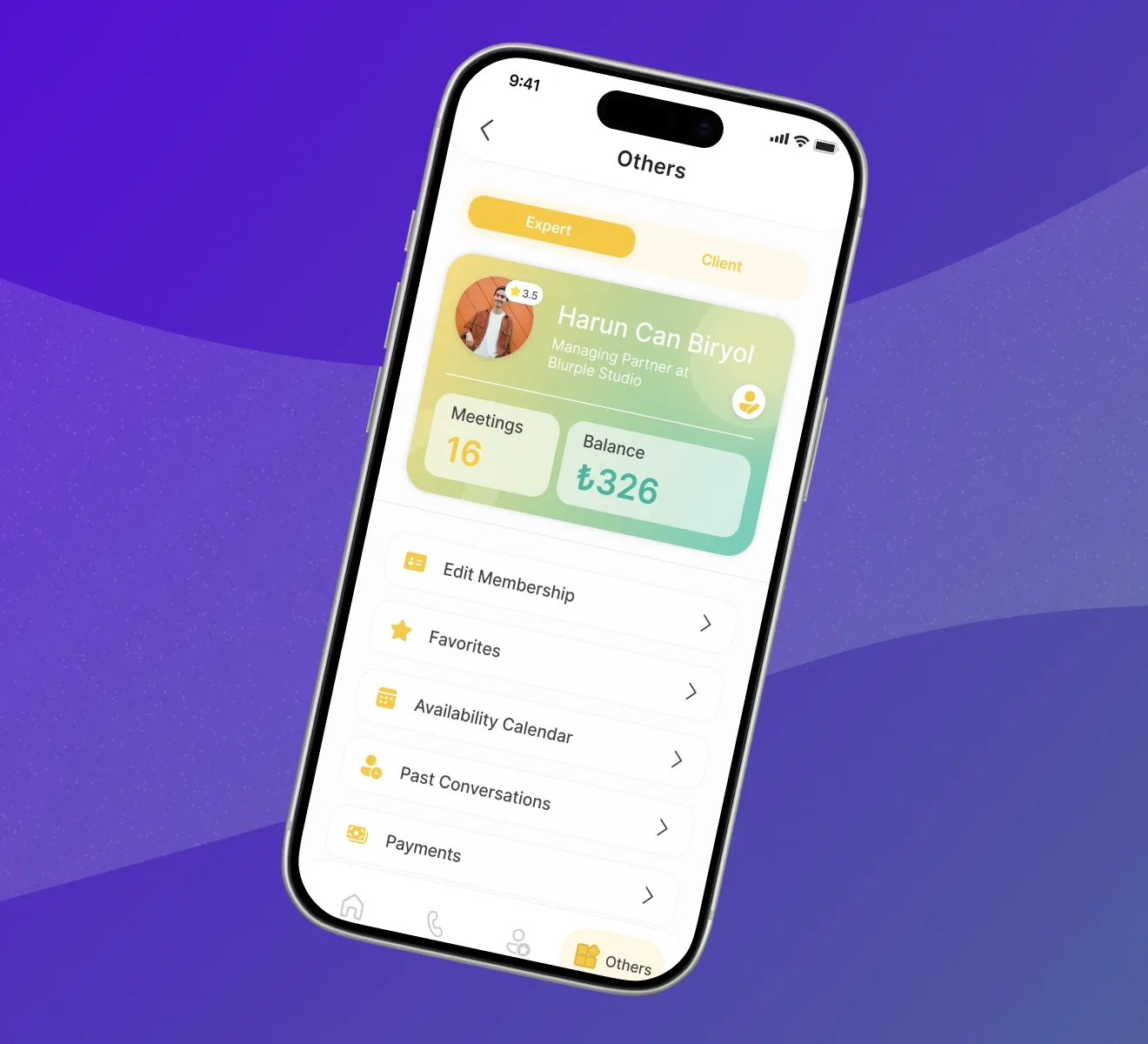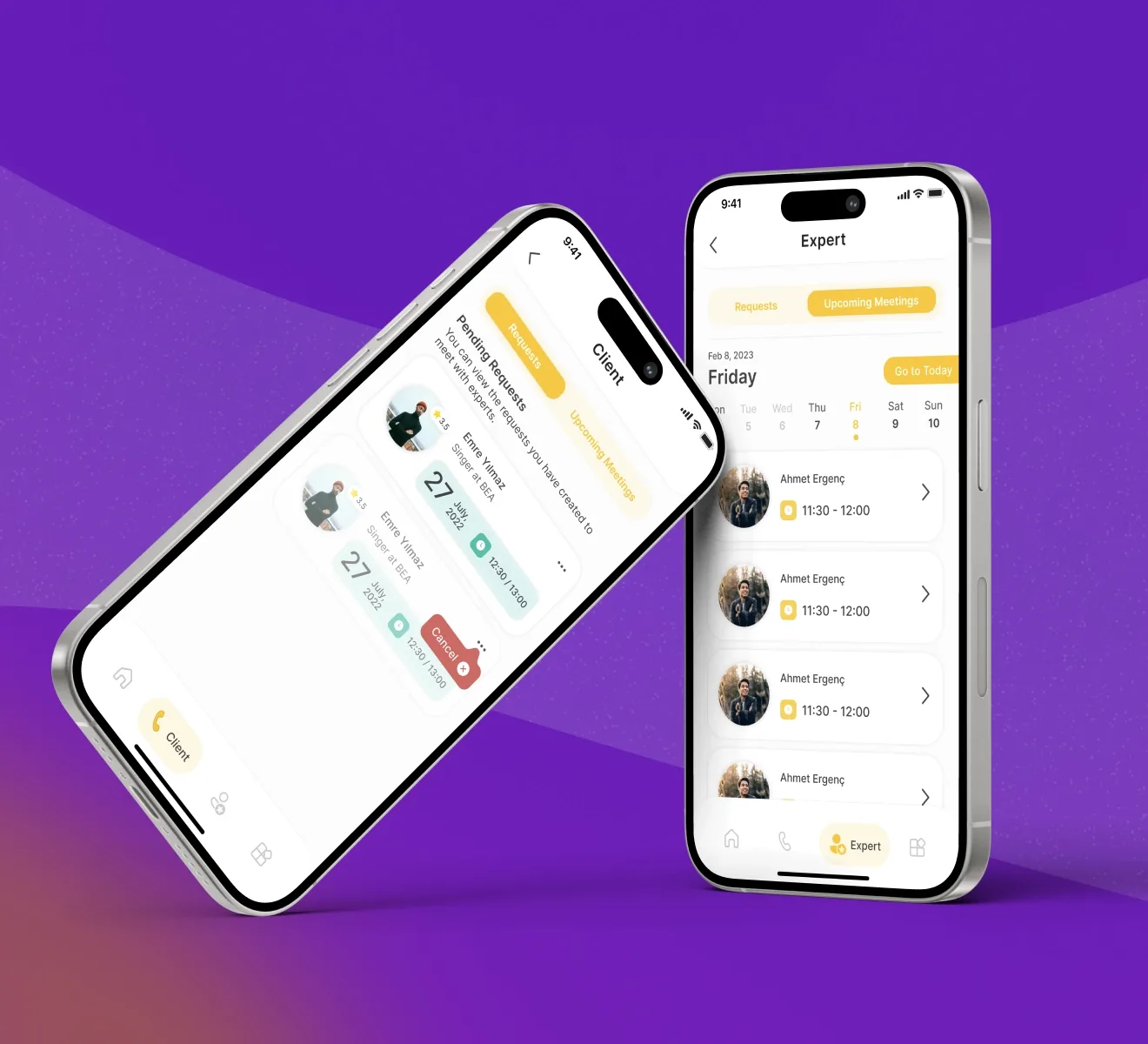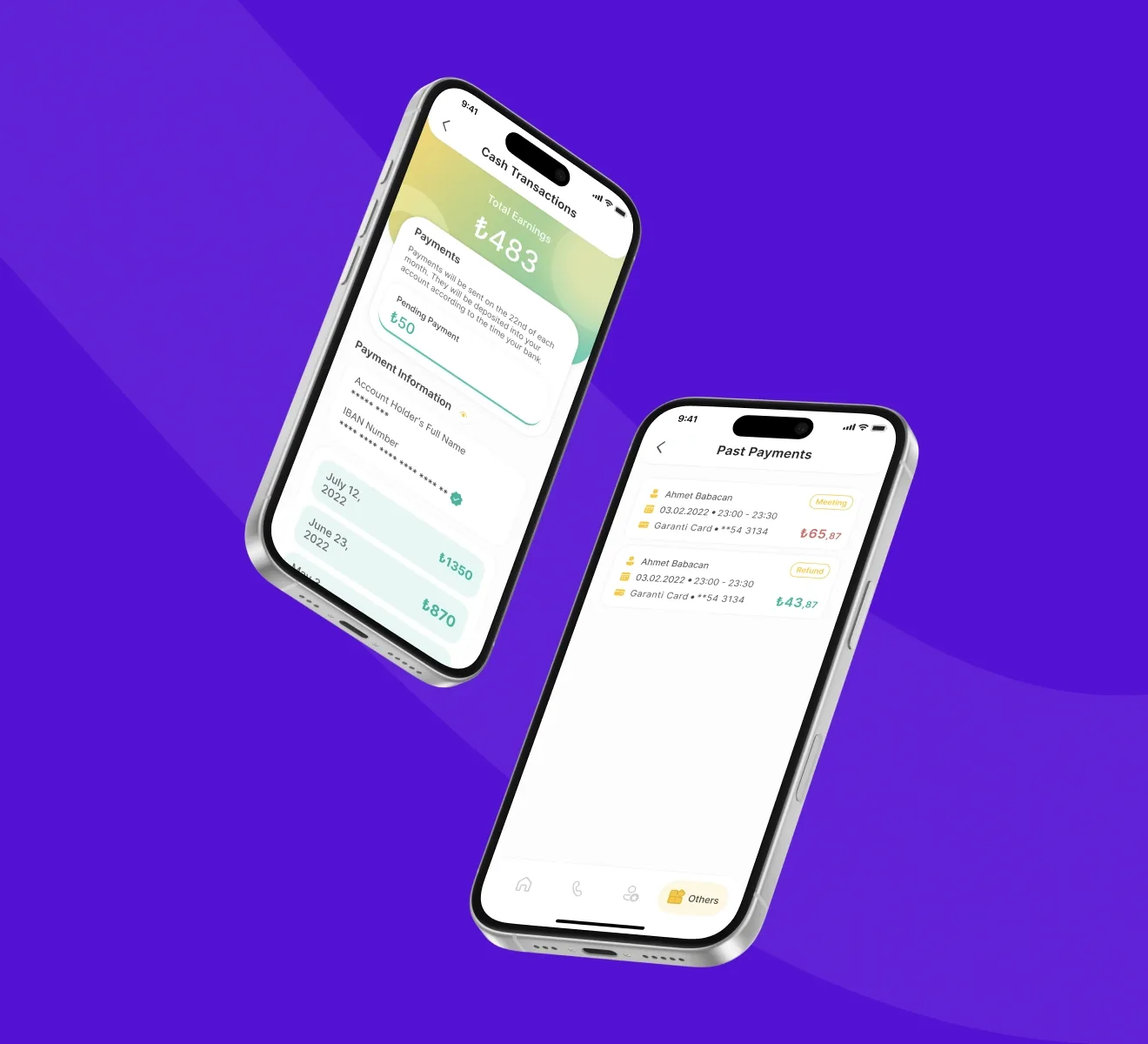
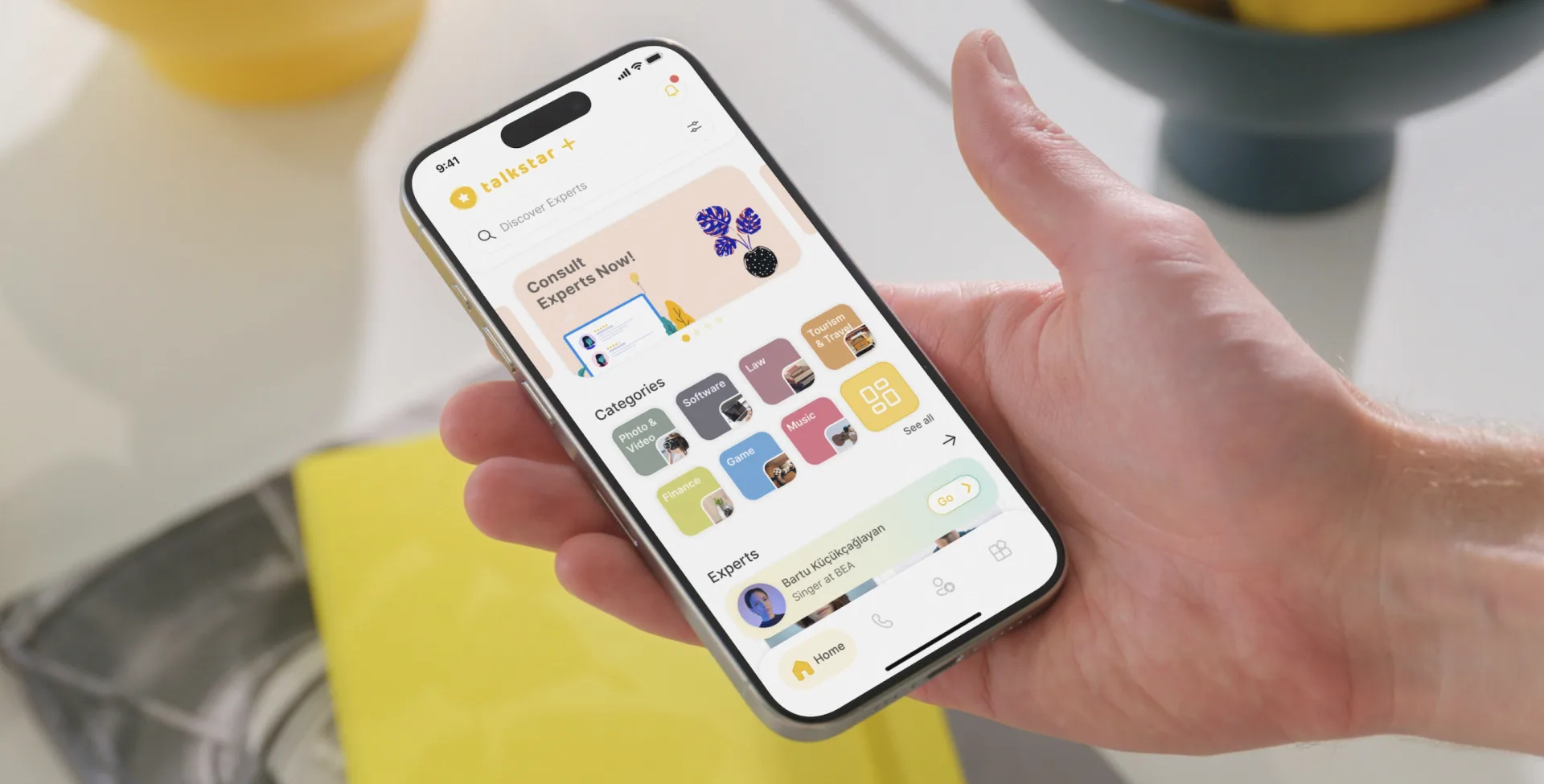
A mobile platform that lets creators host, grow, and monetize live conversations.
Talkstar's promise is simple: expert voices, live. We designed an experience that lets creators set up sessions in minutes, moderate with confidence, and turn attention into sustainable engagement. For the audience, discovery feels natural and participation is frictionless: tap, join, react, tip, subscribe.
In early prototypes, first-time users hesitated at entry: the value proposition wasn't crystal clear and onboarding asked too much, too soon. Live session flows were technically capable but cognitively heavy; new creators weren't sure how to go live, and audiences weren't sure what to do next once they landed.
End-to-end UX and UI for iOS and Android, supported by a scalable design system and production-ready handoff. The app is now live on the App Store, connecting creators with their audiences in real-time.
The Challenge
We faced three interconnected challenges that shaped our design approach:
Win the first 30 seconds. In early prototypes, first-time users hesitated at entry: the value proposition wasn't crystal clear and onboarding asked too much, too soon. Live session flows were technically capable but cognitively heavy; new creators weren't sure how to go live, and audiences weren't sure what to do next once they landed.
Balance 'live energy' with performance. Real-time interfaces invite interaction: reactions, requests to speak, tips, polls. But each feature risks slowing down or visually crowding the moment. The initial IA scattered similar actions across multiple surfaces, hurting retention and learnability on mobile.
Different roles, different needs. Creators, moderators, and audiences share screens but not goals. Without clear role-based affordances, control felt ambiguous at peak moments (speaker queue, hand-offs, muting, reporting).
 Designing Talkstar for Real-Time Connection · The Challenge
The Solution
We anchored the product around three principles: be live, be clear, be considerate.
Be live – Motion and feedback that reinforce presence:
Lightweight motion system for state changes (join, raise hand, mic on/off) that feels instant and never ornamental. Optimistic UI for critical actions (request to speak, tip) with graceful rollback on failure.
Be clear – Reduce cognitive load at every step:
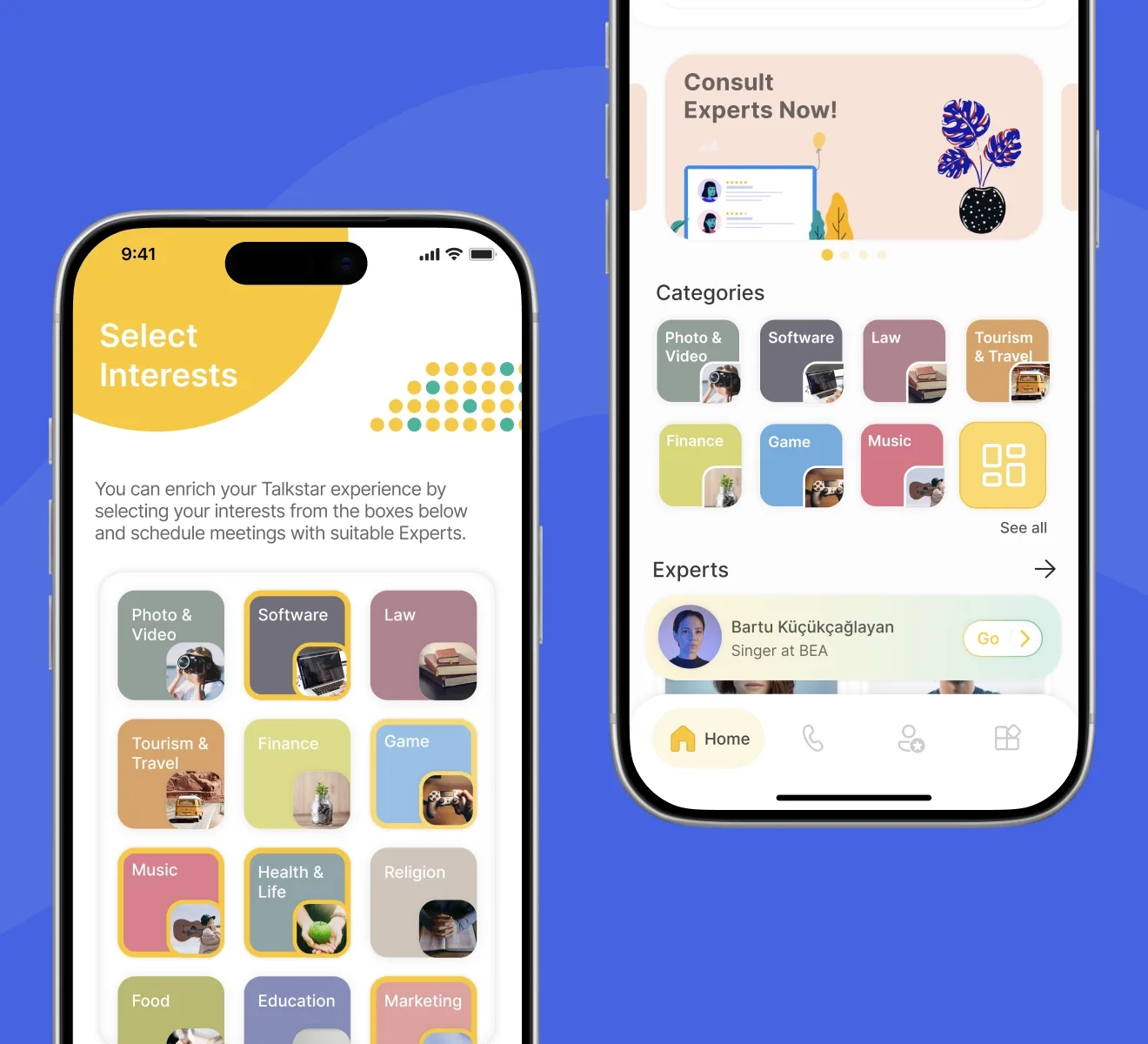
Single-path onboarding with interest tagging; role selection (Creator / Audience) determines next best step. Consolidated live controls: one surface for speak queue, moderation, reactions, and monetization. Predictable navigation patterns; fewer nested surfaces, tighter IA.
Be considerate – Accessibility and trust baked in:
Color + type tokens for AA/AAA contrast targets; dynamic font sizing; haptics aligned to action criticality. Safety flows (report, block, hand-off to moderator) designed to be discoverable yet unobtrusive.
 Designing Talkstar for Real-Time Connection · The Solution
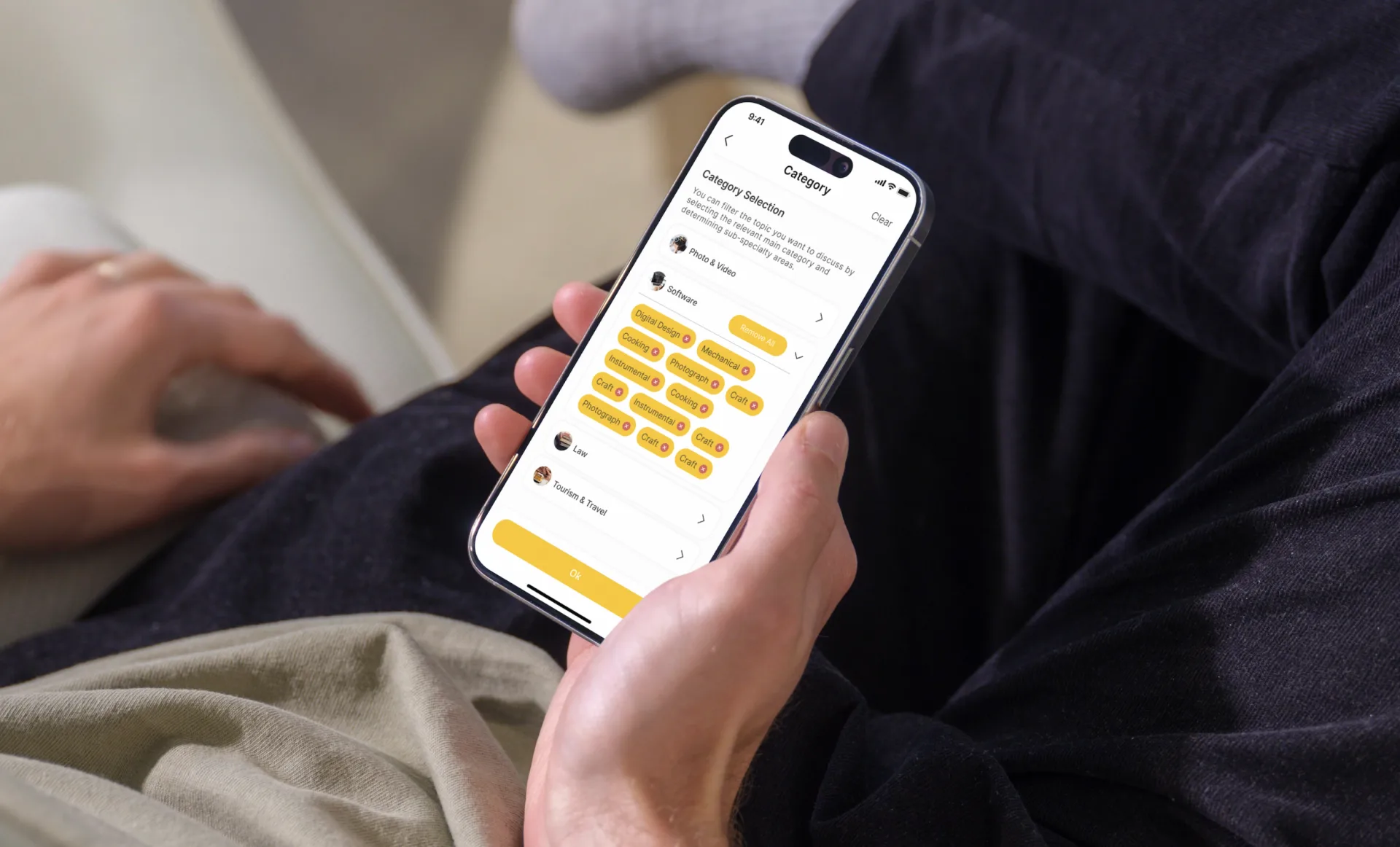
Experience Highlights
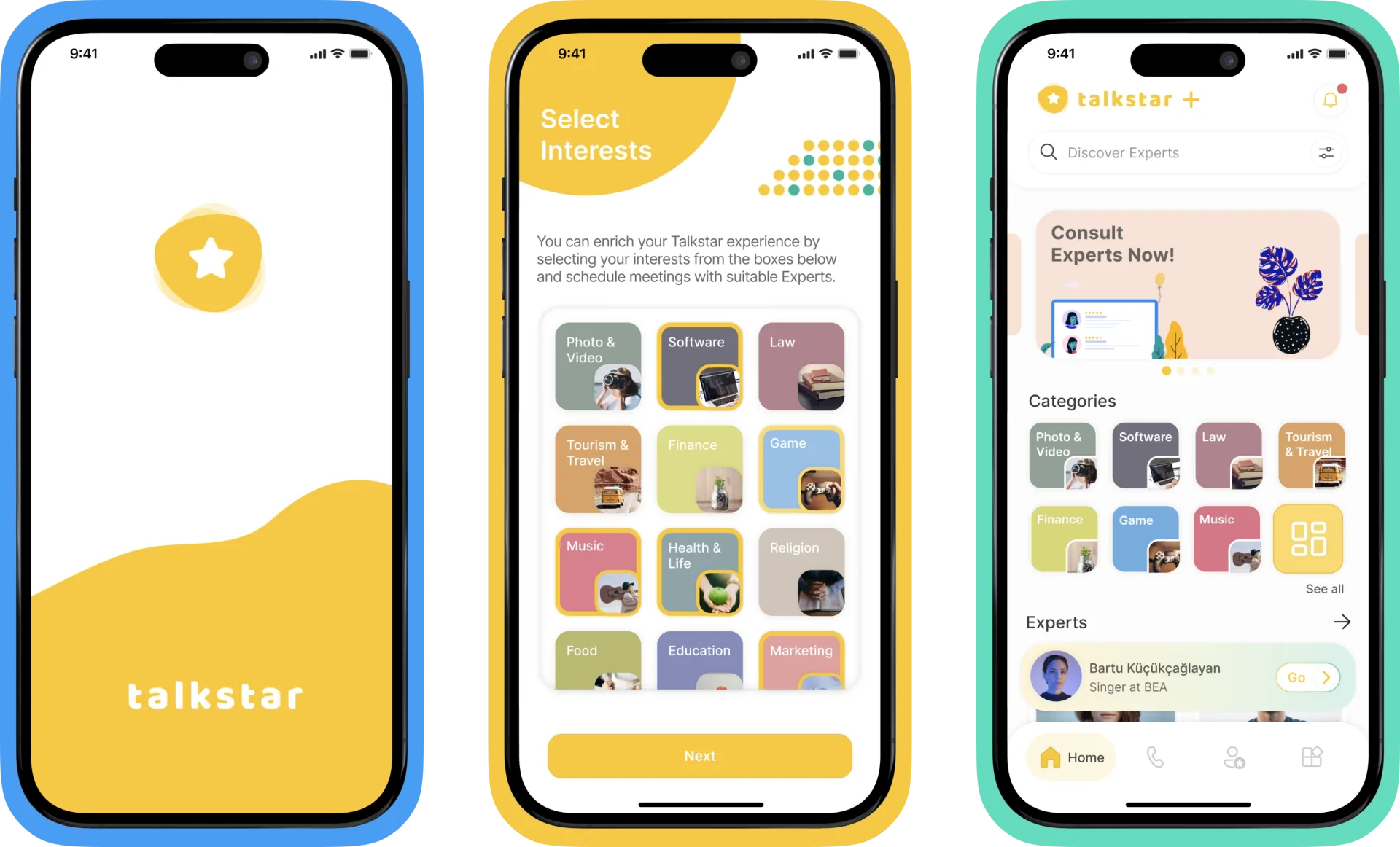
Enhanced Welcome: A bold first impression
A gradient-forward visual and concise value stack ("Join. Learn. Go live.") clarifies purpose in seconds. The first screen sells the room, not the app.
Guided Onboarding: Effortless setup for new users
Interest-based tagging and role selection shorten the path to action. Creators see "Start a Session" with prefilled defaults; audiences land in a relevant live lineup.
Smart Home: Discovery that feels organic
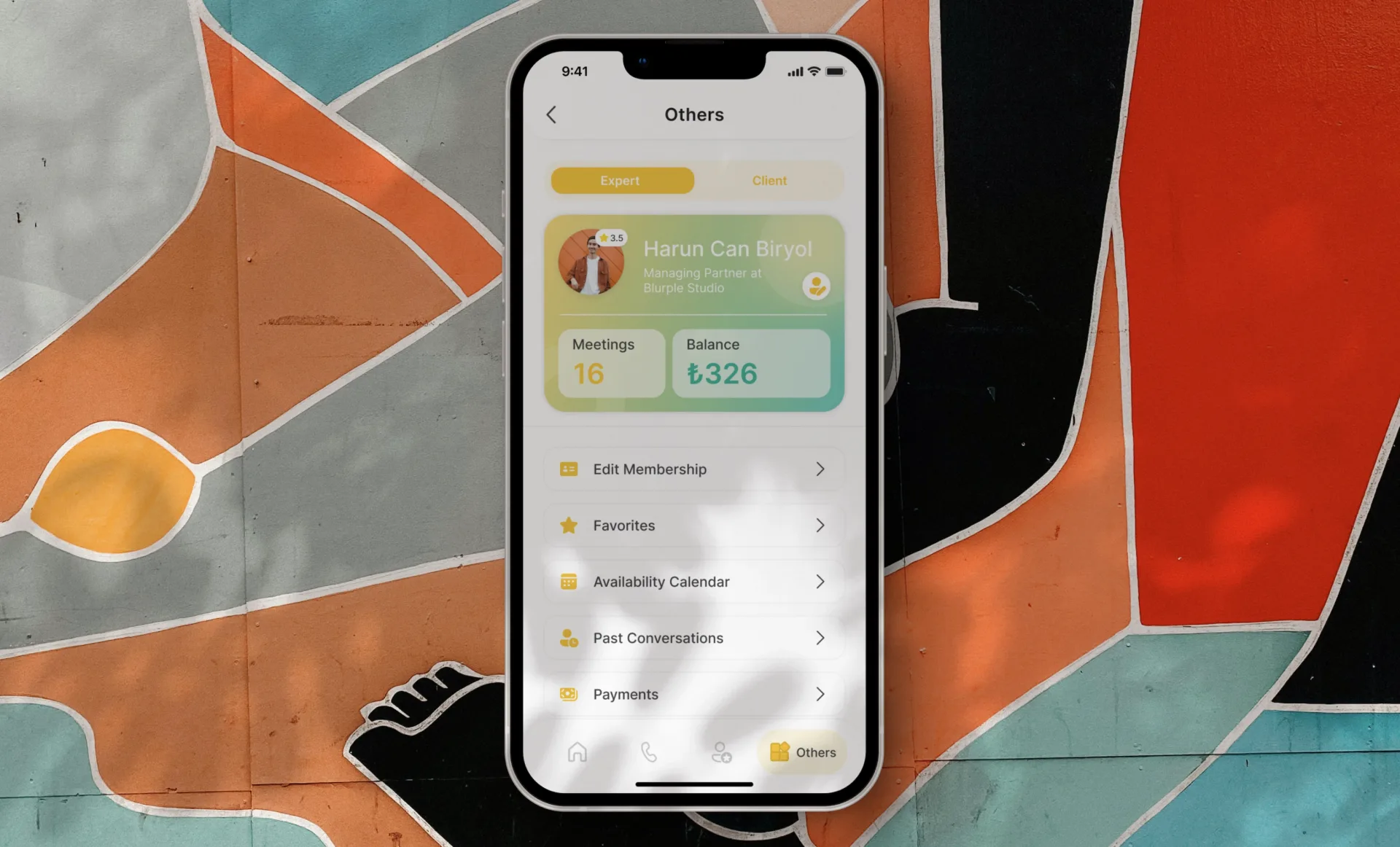
A single feed blends trending experts, categories, and live now, with clear secondary paths for upcoming sessions and saved creators. Cards carry just-enough metadata to decide quickly.
Live Surface: Control without clutter
Speaker queue, raise-hand, mic, reactions, tipping, and moderation live on one composable surface. Priority actions stay thumb-reachable; edge actions collapse into an overflow.
 Designing Talkstar for Real-Time Connection · Experience Highlights
Design Process
Our approach followed the Experience Loop methodology, designed to ensure clarity, alignment, and measurable impact across every phase of design.
1. Focus: Defining the right problem
We aligned stakeholders on Talkstar's core promise: live learning with emotional presence. Through discovery workshops and competitor audits, we mapped behavioral friction points in both creator and audience journeys.
2. Research: Understanding context and behavior
We conducted behavioral reviews of live audio/video platforms (Twitter Spaces, Clubhouse, TikTok Live) and identified three cognitive friction clusters: entry hesitation, unclear live hierarchy, and hidden affordances.
3. Architect: Structuring flow and interaction
We reframed the information architecture around moment ownership: every user action, join, react, speak, should feel continuous. Creator, Moderator, and Audience roles were structured into a unified flow.
4. Make: Designing the experience
In iterative design loops, we built and tested mid- to high-fidelity prototypes for onboarding, live room, and discovery. Visual and motion design focused on energy and clarity.
5. Evolve: Systematizing and scaling
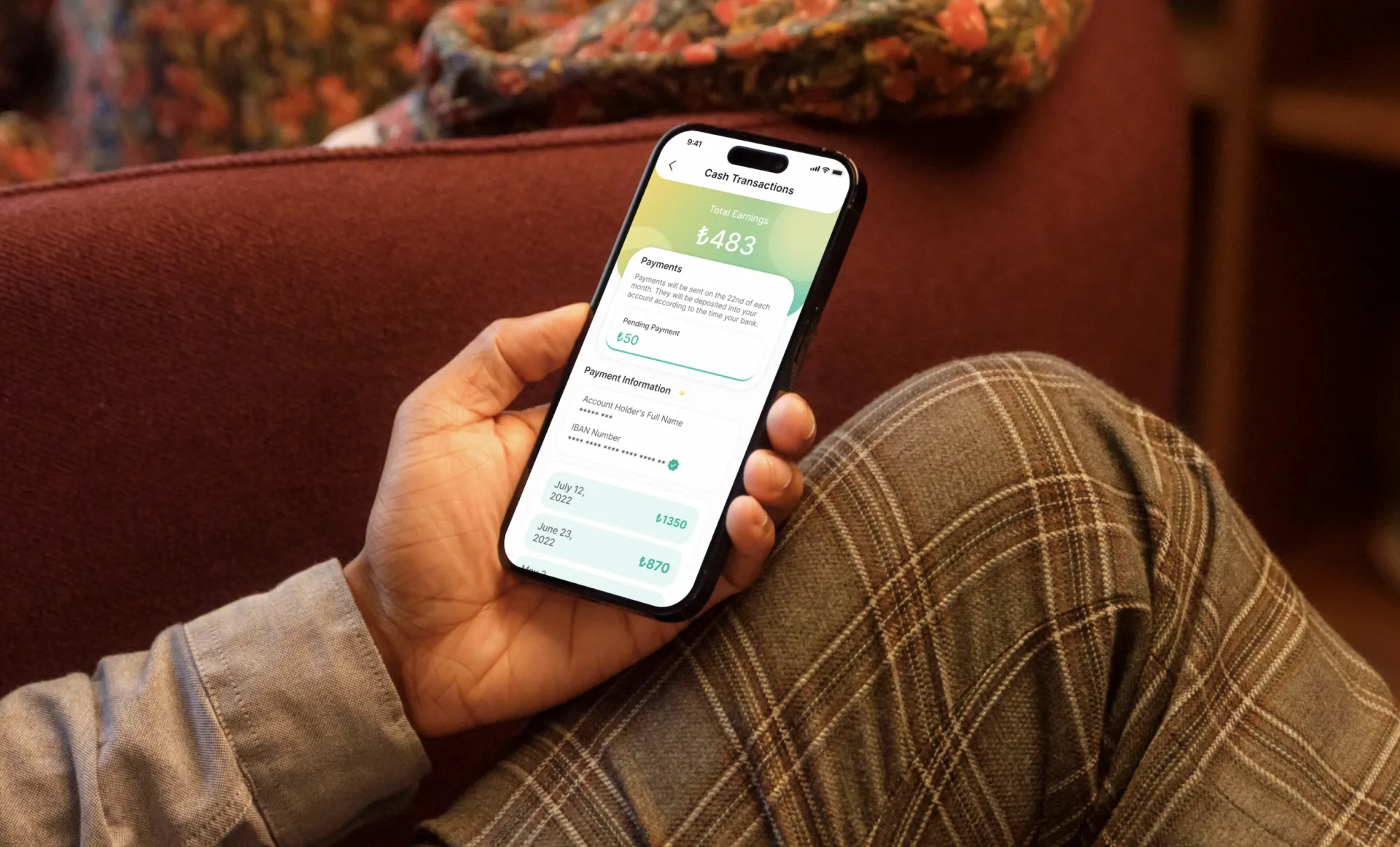
The final phase translated design logic into a modular, token-based system and comprehensive documentation for iOS and Android.
 Designing Talkstar for Real-Time Connection · Design Process