The five-second gap
Can an AI stand in for a human first impression? This autumn, Blu — our resident AI — takes the classic five-second test against real people, on the same 40 landing pages. Before we collect a single data point, here is everything we've locked in: why five seconds, what the science already says, and exactly how we'll score the gap.
Every founder believes their homepage is clear. The five-second test — flash the page, take it away, ask what it said — has been puncturing that belief for two decades, because it measures the only audience that matters: someone who owes you nothing. Panels are slow and cost money. A vision model is instant and free. Whether it can honestly do the same job is an open question, and we'd rather measure it than market it.
The first impression is a verdict, not a glance.
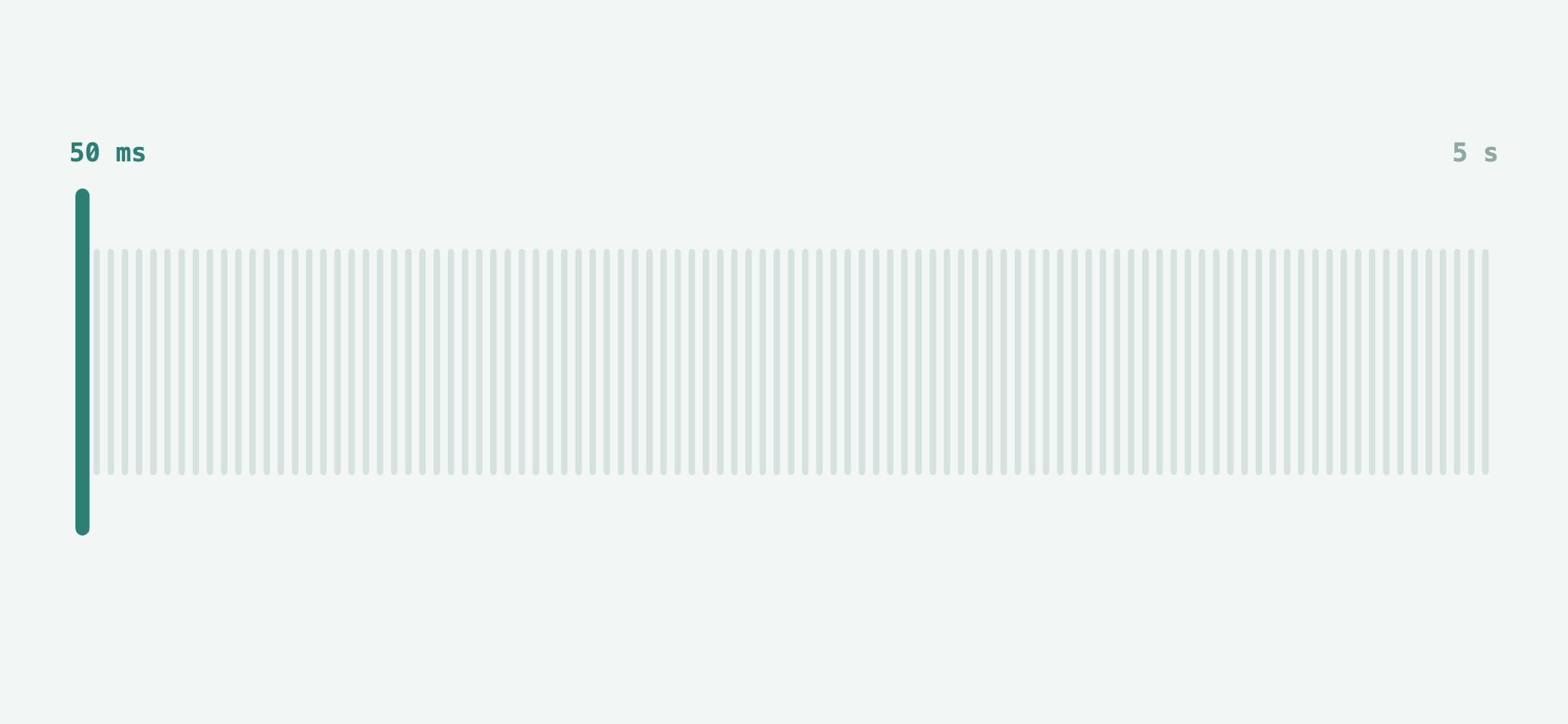
Lindgaard's landmark 2006 studies flashed homepages at people for half a second, then a twentieth of a second — and got the same appeal ratings both times. The judgment is visceral, it forms before reading begins, and it doesn't stay in its lane: through the halo effect, that instant aesthetic verdict bleeds into how usable and how credible people believe the site is. Stanford's web-credibility research found nearly half of users lean on visual design when deciding whether to trust a site at all.
The five-second test, popularized by usability researchers in the mid-2000s, is the practical wrapper around this science: five seconds is long enough to read a headline and notice one or two elements, short enough that nothing can be studied. What survives those five seconds is your actual message — everything else is what you hoped your message was.
Where we expect Blu to agree with humans — and where not.
Our tool blu first-glance already runs AI five-second tests. Honesty requires the follow-up: has anyone checked the AI against the humans it imitates? We registered three hypotheses before touching data:
If Blu fails, we publish the failure and blu first-glance gets a printed warning label. If Blu holds up, every founder gets a five-second panel for free. Either result is worth having — which is the test of a question worth asking.
Registered before the first data point.
This page is the pre-registration. The design below was frozen on 28 July 2026; any deviation will be listed in the published results.
A five-second test measures first impressions — not brand memory, market context, or whether anyone converts on day thirty. And 200 sessions is a field study, not a census: enough to size the gap, not to end the argument. That's why the raw data ships with the result.
[1] Lindgaard, Fernandes, Dudek & Brown (2006) — "Attention web designers: You have 50 milliseconds to make a good first impression!" Behaviour & Information Technology, 25(2), 115–126
[2] Fogg et al., Stanford Web Credibility Project (2002) — how users assess website credibility
[3] UIE — the five-second test method
[4] Nielsen Norman Group — the aesthetic-usability effect